Overview
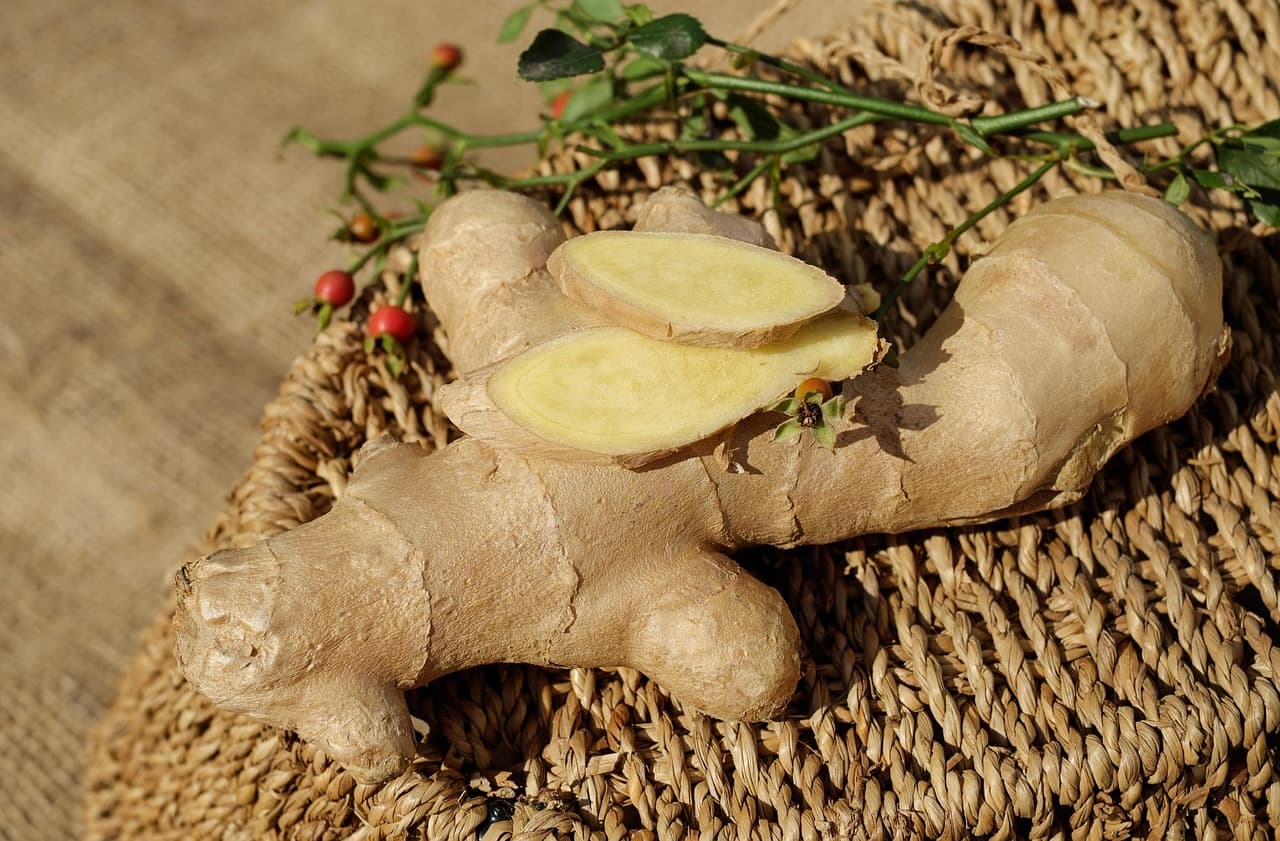
Turmeric is the bright yellow rhizome of Curcuma longa, a plant in the ginger family, and its best-studied active compound is curcumin. A 2023 dose-response meta-analysis pooling multiple randomized controlled trials found that turmeric or curcumin supplementation lowered inflammatory markers such as CRP, TNF-alpha, IL-6 and IL-1beta, and improved markers of oxidative stress like total antioxidant capacity and malondialdehyde, compared with placebo1. A separate 2016 meta-analysis of randomized trials found that turmeric extracts and curcumin reduced pain and improved function scores (WOMAC) in people with joint arthritis, performing comparably to some conventional approaches used in the trials reviewed2.
Beyond joints, curcumin has been studied as a supportive agent for liver health: research on alcoholic liver disease describes curcumin blocking a key inflammatory signaling pathway (NF-kB) and reducing inflammatory chemical messengers in liver immune cells, though this evidence comes from a narrative review of mechanistic and preclinical work rather than a large human trial3. An ethnomedicine survey in Indonesia's Kulon Progo Regency found turmeric rhizome to be one of the most highly valued medicinal plants among local healers, reflecting its wide traditional use, though this describes folk practice rather than a formal Ayurvedic or herbalist textual tradition4.
Is this for you?
Why are you considering this?
This is not medical advice — just general orientation.
Safety
- The reviewed studies describe curcumin as having only minor adverse effects, based on a narrative review of the substance's use in liver disease research3. This same source notes that curcumin has low bioavailability (it isn't absorbed well) in its free, unprocessed form, which is why nanoparticle and other delivery formulations have been developed. Beyond this, our review does not contain dedicated human safety trial data such as detailed side-effect rates, or specific guidance for pregnancy, breastfeeding, or particular medical conditions — so those questions are not answered by the studies reviewed here.
Dosage
The meta-analyses in our review pooled data across multiple randomized trials of turmeric extract and curcumin supplementation but do not report a single specific dosage figure in the abstracts reviewed — they summarize dose-response relationships and clinical outcomes1,2 rather than giving one recommended amount. No specific milligram dosage range is stated in the studies reviewed here, so none can be reported as a study-used figure. Beyond our review, Examine does report studied ranges, and they are deliberately wide: roughly 50 mg to 4 grams a day for ordinary extracts, but only 80 to 240 mg for nanocurcumin (Examine.com). "A curcumin study" can therefore mean two preparations fifty-fold apart in dose.
Where to find it
As an Amazon Associate, Holistic Codex earns from qualifying purchases. Product recommendations are editorially independent.
Interactions
Documented supplement-drug interactions for turmeric extract, according to the SUPP.AI safety database, include: curcumin, aldesleukin, antioxidants, dinoprostone, doxorubicin hydrochloride, ginseng, glutathione, guanosine, glyburide, and insulin. If you take diabetes medications like insulin or glyburide, or chemotherapy agents like doxorubicin, talk to a doctor before adding turmeric or curcumin supplements, since these interactions are recorded in the literature this database draws from.
Traditional Use
Turmeric travelled further than almost any other root, and the record shows it: five of the seven traditions tracked here used it, and each put it to a different job. Read the five together and the disagreement is the interesting part — the same yellow rhizome is a wound powder in one, a bile-mover in another, a painkiller for the ribs in a third, and a liver drug in a fourth.
Ayurveda
India · over 3,000 years
The Sushruta Samhita uses turmeric — haridra — as a working drug rather than a colouring. It goes into rasa-kriya, a thickened decoction of triphala and the Nyagrodhadi group into which powdered haridra and daru-haridra are stirred with honey and applied to stubborn ulcers; it appears in an eye plaster alongside rasanjana and manjishtha; it is cooked into medicated oils and ghee. And in the chapter on prameha — the classical category covering sweet, cloudy, excessive urine — the text says plainly that turmeric proves soothing in those cases5. Ayurveda also reaches for it in joint and skin complaints, which is where it meets the modern research most directly.
What the science says
PartialThe joint indication holds up: a meta-analysis of randomized trials found turmeric extracts and curcumin reduced pain and improved WOMAC function scores in arthritis2, and a dose-response meta-analysis found lower CRP, TNF-alpha, IL-6 and IL-1beta1. The prameha claim is a different matter — nothing in this evidence base tested turmeric against blood sugar or urinary disease.
TCM
China · over 2,000 years
Chinese medicine took turmeric in a digestive direction rather than a joint one. The ethnobotanical record for China lists it against colic, congestion and amenorrhoea, and classes it as a stomachic, a cholagogue — a drug that moves bile — and a haemostatic; a second set of records adds balsamic and antibilious to the list. The through-line is the gallbladder and the gut, not the joints, and it is the oldest of the East Asian readings: the Korean formulas below quote Chinese sources for it.
What the science says
Not yet studiedThe human evidence behind this profile measured joint pain, inflammatory markers and oxidative stress. Bile flow, colic and bleeding — the things the Chinese record actually claims — were not among the outcomes tested, so this reading is untested rather than contradicted.
Korean Medicine
Korea · Dongui Bogam (1613)
Korean medicine gave turmeric a precise job, and it is not the one the supplement aisle advertises. In the Dongui Bogam (1613) the drug appears as 薑黃 and 鬱金 across the internal, external and miscellaneous-disease sections, always for stagnant qi: 推氣散 treats pain under the right ribs with turmeric, cinnamon bark and bitter orange peel; 神仙九氣湯 grinds turmeric with cyperus and roasted licorice against the pain of the nine qi; 氣鍼元 pairs it with green tangerine peel for distension; and in 枳橘湯 the instruction is to add a little turmeric when the stagnation is severe6. Pain in the side and in the chest, and a belly that feels blocked — that is the Korean turmeric.
What the science says
Not yet studiedNo trial in this profile tested turmeric against rib pain, chest tightness or bloating. The evidence that exists points at joints and at inflammatory markers, which the Korean record does not claim for it.
Unani
Greco-Persian lineage · since Avicenna
The Greco-Arabic line used turmeric too, and its list of complaints is the broadest of the five: indigestion, the common cold, skin infections, arthritis, abdominal pain and liver disease. Two honest caveats belong here. The primary Unani sources are still out of reach — the surviving open copy of Avicenna's Canon contains only Book I, and the materia medica is in Book II — so this rests on a compiled attribution rather than on a passage anyone can open. And the ethnobotanical record holds no Iranian or Iraqi entry for this species at all, which is worth saying out loud rather than papering over.
What the science says
PartialOf that list, arthritis is the one modern trials went on to confirm: pooled randomized trials found reduced pain and better joint function2. The liver claim is the weakest link — the supporting work is mechanistic and preclinical, not a controlled human trial.
European Herbalism
Europe · centuries of folk use
Europe's relationship with turmeric runs in an arc, and each end of it is documented. Culpeper's London Dispensatory of 1653 gives it a full humoral entry — "hot in the third degree", it "opens obstructions", and it is "profitable against the yellow jaundice, and cold distempers of the liver and spleen", half a dram taken at bedtime in the pulp of a roasted apple; his tables file the root under the liver and among the deobstruents7,8. By 1898 the King's American Dispensatory has demoted it: turmeric is "a mild, aromatic stimulant, but is seldom used in this country, except to color ointments and pharmaceutical mixtures"9. Then in 2019 the European Medicines Agency issued a final European Union herbal monograph for Curcuma longa rhizome — filed under gastrointestinal disorders. Used, forgotten to a dye, and reinstated by a regulator three and a half centuries later.
What the science says
PartialNote where the regulator landed: the stomach and gut, not the liver. Culpeper's specific claim — jaundice, a cold liver, a blocked spleen — has no controlled human trial behind it; the liver research that exists is mechanistic and preclinical. What modern trials did confirm is something neither he nor the eclectics were aiming at: joints and inflammatory markers2,1.
Tibetan Medicine (Sowa Rigpa)
Tibet · Sowa Rigpa
The Tibetan canon knows turmeric — and knows four of them, the same trap valerian sprang: ཡུང་བ། yung ba is Curcuma longa, but beside it stand dp'a-ser (C. aromatica), dp'a-dkar (C. angustifolia) and the wild yung-ba-rgod (C. zedoaria), each with its own name and its own job11. And the class the Four Tantras assign it has no parallel among the other six entries on this page: turmeric belongs to the group of drugs against poison. The text gives it three tasks — it treats poisonings, sloughs off dead tissue, and suppresses the gnyan diseases. Beside that sits a line that reads more modern than it should: ox-eye daisy, turmeric and barberry bark together treat "heat of the flesh." The long-leaved species has separate duties, aimed at excessive urination and at the skin — weeping sores, pimples and pockmarks (Dashiev 1988).
What the science says
Not yet studiedNo study in our review tested turmeric as an antidote, for dead tissue, or for "heat of the flesh." What is worth naming is where this branch landed: of the seven traditions on this page it is the only one that connects turmeric to something readable as inflamed tissue — and it does so four centuries before the word "inflammation" settled into medicine. That is not confirmation; it is a coincidence worth stating alongside the fact that the canon has no word for inflammation at all and speaks of heat.
What biohacking says
Biohacking
21st century · data & self-tracking
Curcumin is the supplement the anti-inflammation crowd treats as a default, and the community argument is almost entirely about absorption — piperine, phytosomes, liposomes, nanoparticles — because plain curcumin is famously badly absorbed. On the human side this is one of the better-evidenced supplements on the shelf: Examine covers 147 references and 117,479 participants across 82 trials and 42 meta-analyses, with four outcomes at its top evidence grade, anxiety symptoms listed first, and twenty-four more at the second (Examine.com). The formulation obsession is justified rather than marketing noise, and the studied ranges are wide: 50 mg to 4 grams a day for standard extracts, but only 80 to 240 mg for nanocurcumin, so "a curcumin study" can mean two products fifty times apart in dose. The longevity claim is where it thins out. DrugAge holds 45 curcumin entries and the best of them, plus 49 percent, is a fruit fly10 — but the same paper also recorded minus 23.4 and minus 17 percent at 100 mM in the same species, and nine of the 45 records are negative. Mouse entries reach 3 to 11 percent and are mostly not statistically significant. There is no human lifespan record for curcumin in that database.
What the science says
PartialThe dose-response in flies is the part worth carrying over, because it is the opposite of how supplements are usually taken: the same curcumin that added nearly half a lifespan at a moderate dose took away a fifth of one at 100 mM. More is not a stronger version of the same effect.
Evidence Strength
Two meta-analyses pooling multiple randomized controlled trials give this remedy relatively strong footing for reducing inflammatory/oxidative markers and for easing joint arthritis symptoms — that's a step above single small studies. Still, both analyses draw from a limited number of underlying trials, and questions like optimal dosage, long-term safety, and use in specific populations (pregnancy, liver disease treatment) remain thinly covered by dedicated human research in our review. The liver-related findings come only from a narrative review of mechanistic work, not confirmed clinical trials, so that piece of the picture is preliminary.
Frequently Asked Questions
Medical Disclaimer: This article is for educational purposes only and does not constitute medical advice. Always consult a qualified healthcare professional before starting any supplement regimen or making changes to your diet, especially if you have a medical condition or take medications.
Sources
- 1
Dehzad MJ, et al.. Antioxidant and anti-inflammatory effects of curcumin/turmeric supplementation in adults: A GRADE-assessed systematic review and dose-response meta-analysis of randomized controlled trials.. Cytokine. 2023.
Strong EvidencePubMed ↗ - 2
Daily JW, et al.. Efficacy of Turmeric Extracts and Curcumin for Alleviating the Symptoms of Joint Arthritis: A Systematic Review and Meta-Analysis of Randomized Clinical Trials.. Journal of medicinal food. 2016.
Strong EvidencePubMed ↗ - 3
See DOI for full citation. Study DOI 10.22038/apjmt.2015.3983. DOI. .
Strong EvidenceDOI ↗ - 4
Kintoko K, et al.. Ethnomedicine Study on Medicinal Plants in Nanggulan District, Kulon Progo Regency. Journal of Food and Pharmaceutical Sciences. 2025.
Strong EvidenceOpen Access ↗ - 5
Internet Archive — classical source text
- 6
Korean Wikisource — classical source text
- 7
Wellcome Collection — classical source text
- 8
Wellcome Collection — classical source text
- 9
Henriette's Herbal — classical source text
- 10
Soh JW, et al.. Curcumin is an early-acting stage-specific inducer of extended functional longevity in Drosophila.. Experimental gerontology. 2013.
Strong EvidencePubMed ↗ - 11
Wangyal R, et al.. Dataset of materia medica in Sowa Rigpa: Tibetan medicine botanicals and Gawe Dorje's classification system.. Data in brief. 2020.
Strong EvidencePubMed ↗
Contextual Data Sources
- · SUPP.AI — supplement–drug interaction data (Allen Institute for AI) ↗
- · USDA Dr. Duke's Phytochemical & Ethnobotanical Databases — documented traditional and ethnobotanical uses ↗
- · NCCIH — plain-language review of the evidence (U.S. National Institutes of Health) ↗
- · European Medicines Agency — EU herbal monograph (regulatory assessment of dosage and safety) ↗