Overview
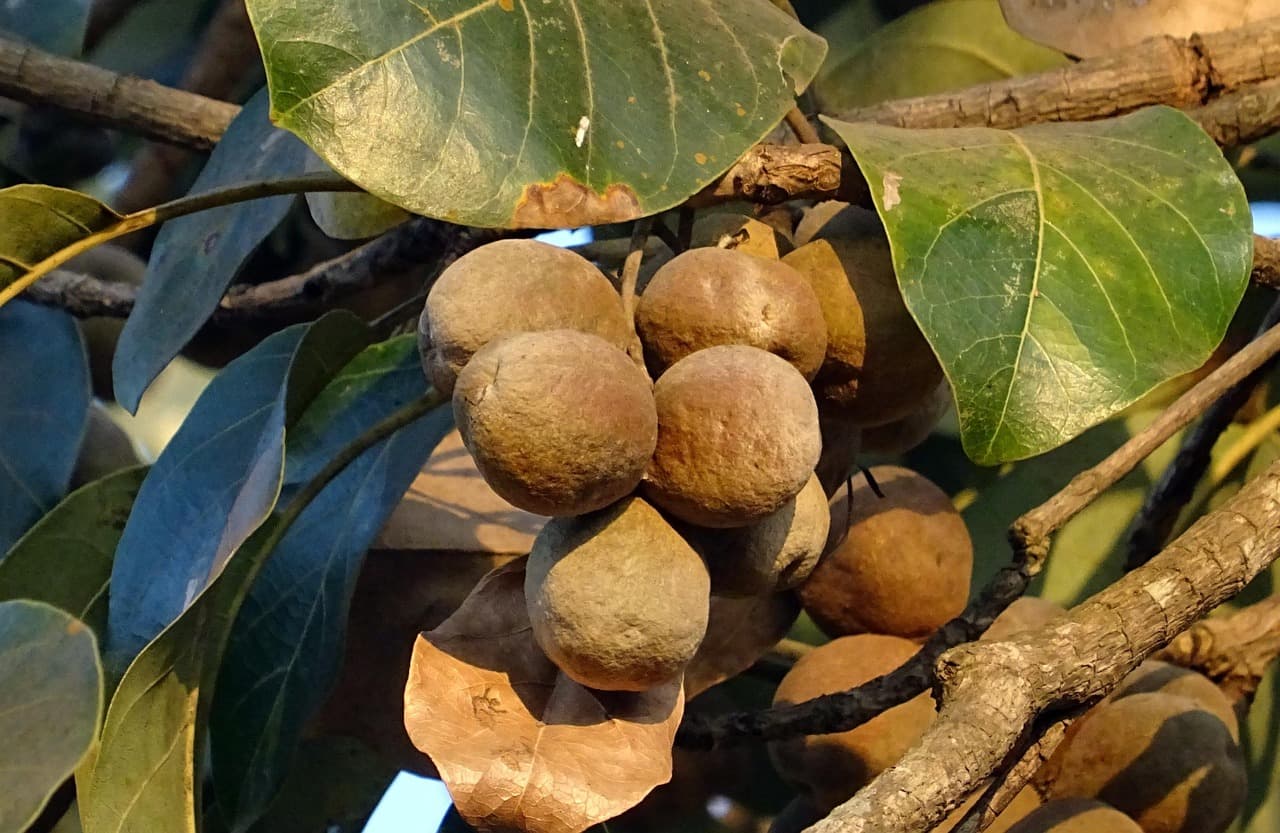
Triphala is not one plant but a trio — a classic Ayurvedic blend of three dried fruits: Terminalia chebula (haritaki), Terminalia bellirica (bibhitaki), and Phyllanthus emblica (amla)1. Modern research has mostly tested it in two very different areas: your mouth and your metabolism. As a mouth rinse, triphala has been compared head-to-head with chlorhexidine (the gold-standard antiseptic mouthwash) for controlling dental plaque and gum inflammation, with several trials and two meta-analyses finding it performs comparably2,3, though a more recent meta-analysis specifically in children found no significant difference between the two — meaning neither rinse clearly outperformed the other in that age group4.
On the metabolic side, a systematic review of twelve trials involving 749 people found that triphala supplementation lowered LDL cholesterol, total cholesterol, and triglycerides in several of the pooled studies, along with reductions in body weight and BMI in about half of them5. A placebo-controlled trial combining triphala with guggulu (Commiphora mukul) in 90 people with high cholesterol reported improvements in cholesterol markers over three months6, and a separate trial giving men 400 mg or 600 mg of encapsulated triphala powder daily for ten weeks measured changes in lipid profile7. A small four-week pilot study also looked at 2,000 mg/day of triphala's effect on gut bacteria in 31 healthy adults, though this was framed as exploratory1.
Is this for you?
Why are you considering this?
This is not medical advice — just general orientation.
Safety
- The reviewed human trials on triphala report it as generally well tolerated in the doses tested, with the systematic review on lipid and glucose effects specifically assessing safety across 749 participants without flagging major adverse events5. Beyond this, no detailed side-effect profile, allergy warnings, or pregnancy-specific safety data were found in the reviewed human studies. A rat toxicity study on a coriander-triphala tablet found no notable toxic effects even at a single high dose, but this is animal data and cannot be used to establish human safety (not cited as human evidence). If you have a medical condition or are pregnant or breastfeeding, talk to your doctor before use, since the reviewed human research does not specifically address these situations.
Dosage
For oral/lipid supplementation, studies used encapsulated triphala powder at 400 mg or 600 mg daily for 10 weeks7, and a separate dietary supplement trial used 2,000 mg daily for 4 weeks1. The guggulu-triphala combination trial administered the herbs three times daily for 3 months6. For oral rinse use, trials used a 0.6% triphala mouth rinse, 10 mL twice daily for 30 seconds, compared against 0.12% chlorhexidine3. These are the amounts used in research, not a recommended dose — talk to a healthcare provider about what might be appropriate for you.
Where to find it
As an Amazon Associate, Holistic Codex earns from qualifying purchases. Product recommendations are editorially independent.
Interactions
No specific drug or herb interaction data was found in the reviewed studies. Given the documented effects on cholesterol and triglycerides seen across several trials5,6,7, anyone already taking cholesterol-lowering or blood-sugar-lowering medication should discuss combined use with a doctor, though this caution is not based on a documented interaction in our review — it's a reasonable precaution given the overlapping effects.
Traditional Use
Triphala is a formula, not a single plant — and that shapes what each tradition actually recorded. Ayurveda treats the three-fruit mixture itself as the medicine; almost everywhere else it travelled, it was the individual fruit, above all Terminalia chebula, that entered the materia medica.
Ayurveda
India · over 3,000 years
In classical Ayurveda triphala appears not as three fruits used loosely together but as a named, formalized compound. The Sushruta Samhita, in Bhishagratna's 1907 translation, groups it with the other classic trios — "Triphala, Trikatu and Trimada are called Trivarga" — and lists it among the Kashaya drugs, the astringent, bitter group to which it lends its name8. The same text documents the three components individually — Haritaki (Terminalia chebula), Amalaka (Phyllanthus emblica) and Vibhitaka (Terminalia bellirica) — and describes triphala decoctions prepared even in combination with curd. It was a settled therapeutic entity with its own name, not a later reconstruction.
What the science says
PartialModern trials test exactly this three-fruit combination rather than a stand-in for it: three meta-analyses and four randomized trials find triphala comparable to chlorhexidine for dental plaque and gingivitis, while its effects on cholesterol, weight and BMI remain mixed across pooled studies.
TCM
China · over 2,000 years
In Traditional Chinese Medicine the record centres on a single one of the three fruits — Terminalia chebula, 訶子, he zi — and not on the triphala mixture at all. Chinese ethnobotanical records document 35 distinct traditional uses for this one fruit, the highest count of any country for the species, returning again and again to astringent action, bloating, cough, diarrhoea and the easing of constipation. That is a real divergence from Ayurveda, where the mixture itself is the medicine.
What the science says
Not yet studiedThe clinical evidence behind this profile covers triphala as a compound, not chebula on its own, so the Chinese use of the single fruit sits outside what those trials measured — untested rather than contradicted.
Korean Medicine
Korea · Dongui Bogam (1613)
Korean medicine likewise worked with the single fruit and not with the blend. The Dongui Bogam (東醫寶鑑), compiled by Heo Jun in 1613, references 訶子 (haja, Terminalia chebula) in 41 separate passages. One key entry holds that when lung qi rises abnormally — producing cough or breathlessness — the bark of the chebulic fruit is indicated, a statement the text attributes to the earlier physician Li Dongyuan. The fruit also appears as a component of named classical formulas: 秘眞丸, 秘傳降氣湯 and 蘇合香元9.
What the science says
Not yet studiedNo trial has tested chebula bark for cough or breathlessness; the human evidence for triphala lies in oral health and metabolic markers, which is not what the Korean record claims for this fruit.
Unani
Greco-Persian lineage · since Avicenna
In Unani medicine the documented record is markedly thinner, and it is worth saying so plainly. Ethnobotanical records show Terminalia chebula used in Iran as a tonic and a mild laxative (aperiens) and in Turkey as an astringent and laxative — two entries from each country, not broad coverage. Primary Unani monographs and Book II of Avicenna's Canon, the part that carries his materia medica, were not reachable in searchable form for this review. This is therefore a floor, not a ceiling: silence from a source nobody can open is not evidence of absence.
What the science says
Not yet studiedNothing in the clinical literature addresses the Unani use, and the thinness here reflects source texts that could not be reached as much as an absence of research — a gap to be honest about rather than a verdict.
European Herbalism
Europe · centuries of folk use
European herbalism knew all three fruits under 17th-century apothecary names: Chebs (Terminalia chebula), Bellericks (Terminalia bellirica) and Emblicks (Phyllanthus emblica). Nicholas Culpeper's London Dispensatory of 1653 binds all three to one effect in a single sentence — "Myrobalans of all sorts, especially Chebs, Bellericks, and Emblicks purge flegm very gently, and without danger" — gives the group the humoral qualities cold and dry, credits it with purging the stomach and strengthening the heart, brain and sinews, and notes explicitly that they are seldom used alone; a London pharmacopeia recipe lists all three fruits together in one compound10,11,12. The myrobalans reached the European pharmacy through Arab-Persian trade, not by independent European discovery.
What the science says
Not yet studiedThe claim itself, a gentle purging of phlegm by a remedy that is cold and dry, belongs to humoral theory and has never been put to a trial.
Tibetan Medicine (Sowa Rigpa)
Tibet · Sowa Rigpa
Tibetan medicine (Sowa Rigpa) holds Terminalia chebula to be one of its most significant single drugs. A review of 586 traditional Tibetan remedies drawn from 25 classical works names the fruit repeatedly, with 19 occurrences of its full Latin designation13. The tree does not grow at Tibetan altitudes, so the fruit was obtained by trade from further south — the same classical lineage that Indian medicine draws on, arriving by a different road.
What the science says
Not yet studiedThe paper documenting this standing is a survey of classical texts, not a clinical study, and chebula's Tibetan indications have never been measured against the outcomes used in the triphala trials.
What biohacking says
Biohacking
21st century · data & self-tracking
Triphala is popular in the gut-health corner of biohacking, usually taken at night as a powder, and it is also the clearest example on this whole shelf of how thin the modern record can be behind a well-known name. Of the four sources this site checks for the biohacking angle, three return nothing at all: Examine has no triphala page, Supp.ai has no interaction record for the formula or for any of its three fruits, and the NIH Office of Dietary Supplements has no fact sheet. Only DrugAge holds anything, and what it holds is about a component rather than the formula — two records for Emblica officinalis extract, each adding 5.9 percent to fruit fly lifespan14. Amla on its own does have an Examine page, and it is honest about the size of the evidence: 32 participants in a single trial, four outcomes at the third grade, described as very limited human evidence (Examine.com). None of that is a verdict on triphala. A three-fruit formula is not the sum of one fruit's studies, which is exactly the substitution the supplement market makes.
What the science says
Not yet studiedThere is nothing to report here, and that is the report. The community use is real and long-standing, but no source we accept holds graded human evidence for triphala as a formula — so anyone telling you what triphala does, in numbers, is telling you something they do not have.
Evidence Strength
Triphala has a genuinely substantial body of human research behind it compared to many herbal remedies — three meta-analyses and four randomized controlled trials, covering both dental plaque/gingivitis and cholesterol/metabolic outcomes. The dental evidence is fairly consistent, with most trials and two meta-analyses showing triphala performs comparably to chlorhexidine, though a more recent meta-analysis in children found no clear winner between the two. The metabolic evidence (cholesterol, weight, BMI) comes from a systematic review of a dozen trials with real but mixed results — benefits showed up in some but not all of the pooled studies, so this remains a promising but not fully settled area, and larger trials would help confirm the effect size.
Frequently Asked Questions
Medical Disclaimer: This article is for educational purposes only and does not constitute medical advice. Always consult a qualified healthcare professional before starting any supplement regimen or making changes to your diet, especially if you have a medical condition or take medications.
Sources
- 1
Peterson CT, et al.. Modulatory Effects of Triphala and Manjistha Dietary Supplementation on Human Gut Microbiota: A Double-Blind, Randomized, Placebo-Controlled Pilot Study.. Journal of alternative and complementary medicine (New York, N.Y.). 2020.
Strong EvidencePubMed ↗ - 2
AlJameel AH, et al.. Effect of triphala mouthrinse on plaque and gingival inflammation: A systematic review and meta-analysis of randomized controlled trials.. International journal of dental hygiene. 2020.
Strong EvidencePubMed ↗ - 3
Baratakke SU, et al.. Efficacy of triphala extract and chlorhexidine mouth rinse against plaque accumulation and gingival inflammation among female undergraduates: A randomized controlled trial.. Indian journal of dental research : official publication of Indian Society for. 2017.
Strong EvidencePubMed ↗ - 4
Minervini G, et al.. Comparative anti-plaque and anti-gingivitis efficiency of Triphala versus chlorhexidine mouthwashes in children: a systematic review and meta-analysis.. The Journal of clinical pediatric dentistry. 2024.
Strong EvidencePubMed ↗ - 5
Phimarn W, et al.. Effects of Triphala on Lipid and Glucose Profiles and Anthropometric Parameters: A Systematic Review.. Journal of evidence-based integrative medicine. 2021.
Strong EvidencePubMed ↗ - 6
Donato F, et al.. Guggulu and Triphala for the Treatment of Hypercholesterolaemia: A Placebo-Controlled, Double-Blind, Randomised Trial.. Complementary medicine research. 2021.
Strong EvidencePubMed ↗ - 7
Sarosh I, et al.. Determination of chemical composition and investigation of potential of triphala powder in hypercholesterolemia in men in controlled randomized trial.. Pakistan journal of pharmaceutical sciences. 2023.
Strong EvidencePubMed ↗ - 8
Internet Archive — classical source text
- 9
Korean Wikisource — classical source text
- 10
Wellcome Collection — classical source text
- 11
Wellcome Collection — classical source text
- 12
Wellcome Collection — classical source text
- 13
Li C, Li Y, Huang X, Li S, Sangji K, Gu R.. Traditional Tibetan medicine: therapeutic potential in lung diseases.. Frontiers in pharmacology. 2024.
Strong EvidenceEurope PMC ↗ - 14
Rawal S, et al.. Dietary intake of Curcuma longa and Emblica officinalis increases life span in Drosophila melanogaster.. BioMed research international. 2014.
Strong EvidencePubMed ↗

