Overview
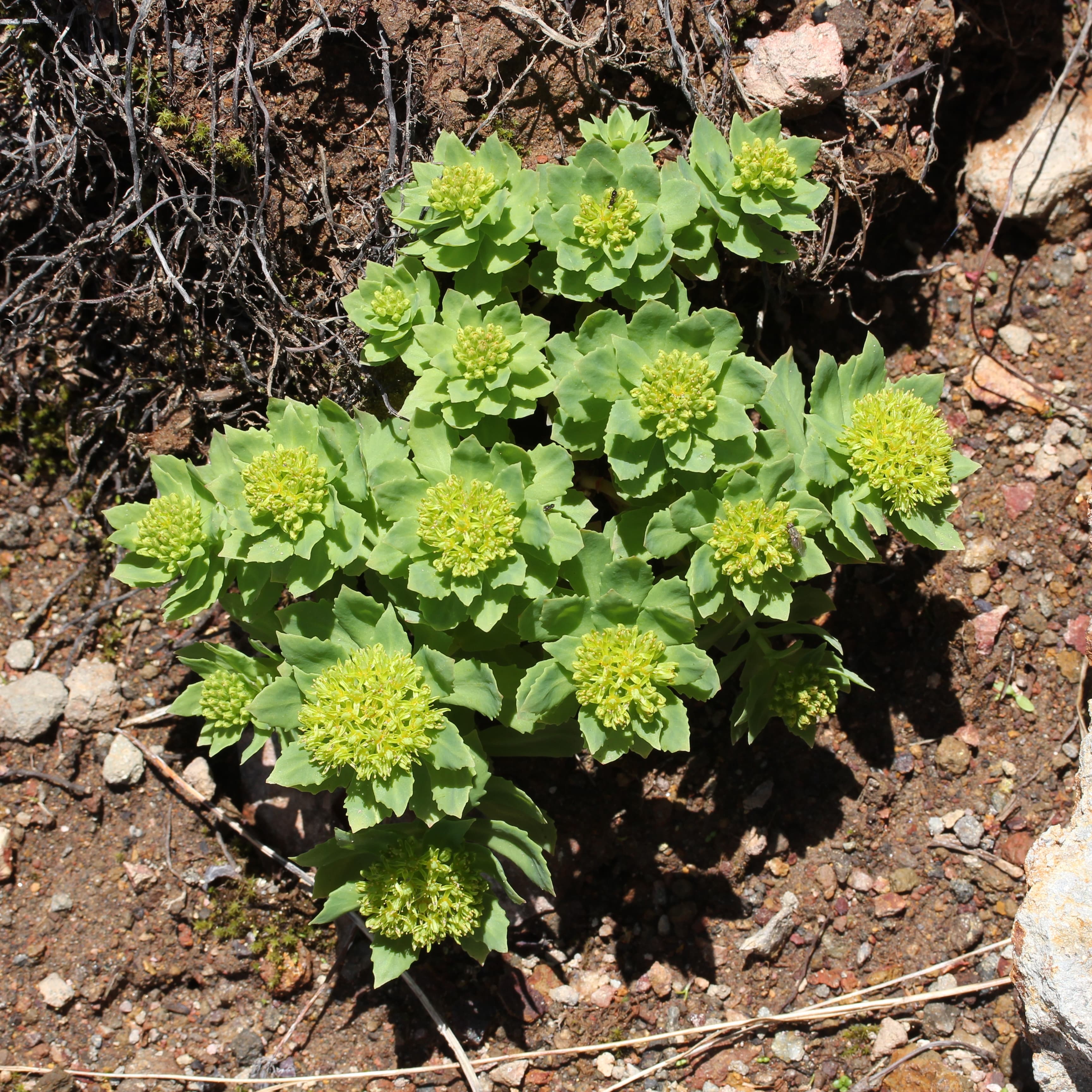
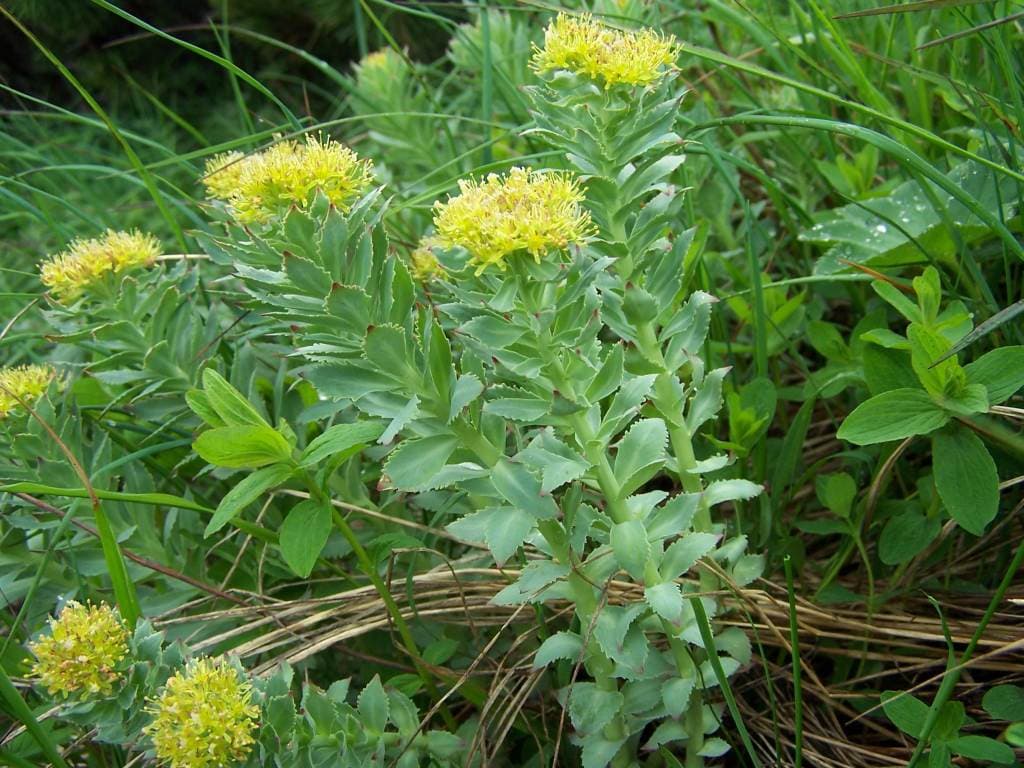
Rhodiola is a group of hardy, cold-climate plants used to make herbal extracts marketed for stress and fatigue. The species matters a lot here: Rhodiola rosea (golden root) grows across Europe, boreal regions and North America, including in Slovakia's Tatras and Malá Fatra mountains, while Rhodiola crenulata is a separate high-altitude species from China, Nepal, India and Bhutan (occurrence records in GBIF). Its roots and rhizomes contain compounds like salidroside, rosavin and tyrosol, which build up most in the rhizome and peak early in the growing season1.
In people, a Rhodiola rosea extract taken over two weeks was linked to lower self-reported anxiety, stress, anger and confusion in mildly anxious adults, though this trial had no placebo group2. A combination product containing rhodiola alongside magnesium, B vitamins and green tea extract modestly reduced stress scores over 28 days in chronically stressed adults compared with placebo, but this tested a multi-ingredient blend, not rhodiola alone3. Separately, a 2025 meta-analysis found that Rhodiola crenulata extract improved blood oxygen levels and clinical symptoms in people with acute high-altitude sickness4 — but this is a different species used for a different problem than everyday stress. Laboratory work on root extracts has also shown effects on inflammatory markers in cultured brain immune cells, an early, preliminary finding that has not yet been tested in people5.
Is this for you?
Why are you considering rhodiola?
This is not medical advice — just general orientation.
Safety
- Rhodiola is possibly safe for up to 12 weeks of use, according to NCCIH; reported side effects include dizziness, headache, insomnia, and either dry mouth or excessive saliva production. The EMA notes the only documented contraindication is hypersensitivity to the active substance, with abdominal pain and diarrhoea reported at an unknown frequency. Both official sources agree that safety during pregnancy and breastfeeding has not been established, and both recommend against use in these situations. It is not recommended for children and adolescents under 18. If symptoms of stress persist for more than two weeks of use, the EMA advises consulting a doctor. The trial testing rhodiola alone described a "favourable safety tolerability profile" over 14 days, though it was not placebo-controlled2.
Dosage
The EMA's registered traditional-use posology for adults and the elderly is 144–200 mg once or twice daily, with a traditional-use range of 144–400 mg. In the trial testing rhodiola rosea extract alone, participants took 2 x 200 mg tablets daily (one before breakfast, one before lunch) for 14 days2. In the combination-product trial, rhodiola was one part of a multi-ingredient formula (with magnesium, B vitamins and green tea/L-theanine) taken daily for 28 days — the study did not report the rhodiola dose in isolation3. No dosage data for Rhodiola crenulata in altitude-sickness treatment was specified in our review beyond the meta-analysis confirming its use as an extract alongside or instead of conventional medicine4.
Where to find it
As an Amazon Associate, Holistic Codex earns from qualifying purchases. Product recommendations are editorially independent.
Interactions
An interaction between rhodiola and losartan (a blood pressure medication) has been reported, according to NCCIH. The EMA states that no clinically relevant interactions have been observed for its registered traditional-use product. Beyond this, no other herb-drug interactions were documented in the reviewed studies.
Traditional Use
Ayurveda
India · over 3,000 years
The modern shelf sells rhodiola as a Himalayan or Ayurvedic adaptogen, and the classical Indian record does not carry that attribution. What decides it is not geography, because the plant does reach Asia. Of the 55,623 occurrence records for Rhodiola rosea in GBIF, 391 come from Japan, 219 from China, 55 from India, 38 from Korea and 6 from Pakistan, so a claim that Ayurveda could not have known it would simply be untrue. What is absent is any trace in the corpus itself: Bhishagratna's English Sushruta Samhita carries no entry for the plant under any of its names, in a text where ginger, turmeric and triphala each appear repeatedly. And where the genus genuinely is used in the Indian Himalaya, the peer-reviewed record assigns it elsewhere — Rhodiola imbricata of Ladakh is described as an indigenous plant of the Tibetan and Amchi system of medicine11, the tradition this profile already covers in a card of its own.
What the science says
DisputedThe distinction decides what the evidence covers: fatigue and stress trials are run on R. rosea extracts, so a product sold on a Himalayan story is not automatically the plant those studies tested.
TCM
China · over 2,000 years
Chinese medicine uses rhodiola, but a different one: the drug hongjingtian is Rhodiola crenulata, a high-altitude species, classed among herbs that "tonify qi" (vital energy). Its documented clinical territory is altitude — it is one of a handful of plants reached for in acute altitude sickness, prescribed under a pattern of qi deficiency with the goal of replenishing qi and nourishing yin in someone whose body has dropped into thin air faster than it could adapt9.
What the science says
PartialA 2025 meta-analysis found Rhodiola crenulata extract improved blood oxygen saturation and clinical outcomes in acute high-altitude disease, supporting this specific traditional indication in this specific species4.
European Herbalism
Europe · centuries of folk use
The written European record splits into two mismatched halves. The older half is brief: in the roots section of Culpeper's London Dispensatory of 1653, the drug appears as Rhodia radix, Rose Root, and the entry says only that crushed and applied to the head it relieves the pain there, being cooling — Culpeper's own tables in the same book place it among roots cold in the first degree and name it as the one root that cools the head. Nothing about stamina, nothing taken internally6,7,8. The newer half comes from the north and east — a root dug for endurance in cold and hard labor, but not written down as a remedy until the 20th century.
What the science says
PartialThe EMA explicitly declined to grant rhodiola "well-established use" status, citing insufficient evidence of clinical efficacy for fatigue symptoms, even while registering it on traditional-use grounds alone.
Tibetan Medicine (Sowa Rigpa)
Tibet · Sowa Rigpa
Tibetan medicine (Sowa Rigpa) has a long relationship with this genus, but with a different plant and for a different purpose. The rhodiola used in Sowa Rigpa practice is mostly Rhodiola crenulata, gathered on the high plateau roughly between 2,800 and 5,600 meters, where few medicinal plants survive at all. The complaints recorded for it sit in the chest: coughing up blood, inflamed lungs, a cough that won't settle, plus a set of gynecological indications. Fatigue itself is not what practitioners reached for it for10.
What the science says
Not yet studiedNo study in the reviewed research tested rhodiola against these specific respiratory or gynecological indications, so this traditional use remains unstudied here.
What biohacking says
Biohacking
21st century · data & self-tracking
Rhodiola is a fixture of the modern adaptogen shelf, taken for fatigue, stress tolerance and endurance, and often cycled on and off in the belief that continuous use dulls the effect. The measured picture is narrower than the marketing. Examine covers rhodiola across 38 references and 1,843 participants in 21 trials and 2 meta-analyses, and exactly one outcome reaches its top evidence grade: cognition. Seven more sit at the second grade, led by aerobic exercise metrics, and eight fall into the two lowest (Examine.com). The dosing advice is the genuinely useful part, because it runs against the usual supplement instinct: trials cluster around the SHR-5 extract standardized to 4 mg of salidroside per 144 mg tablet, daily anti-fatigue use has been reported effective from as little as 50 mg, acute anti-stress use falls between 288 and 680 mg, and rhodiola shows a bell-curve response, so exceeding roughly 680 mg is expected to work less well, not more. Longevity forums cite rhodiola too: DrugAge holds 19 entries, with average lifespan gains from about 12 to 40 percent12,13,14. Those were fruit flies, nematode worms and silkworms — there is no human lifespan record for rhodiola in that database.
What the science says
PartialRhodiola is one of the few supplements where taking more is a documented mistake rather than a waste of money, and it is also one where the tradition and the trials point in the same direction: Siberian and Scandinavian use was for endurance and exhaustion, which is where the graded human evidence sits as well.
Evidence Strength
There's a reasonable body of human evidence here, but it's split across two different plants and two different uses, which makes it easy to overstate. For Rhodiola crenulata and altitude sickness, a 2025 meta-analysis pooling multiple randomized trials found real improvements in blood oxygen and symptoms4 — that's a solid basis. For Rhodiola rosea and everyday stress, the picture is thinner: one small trial without a placebo group2 and one trial testing rhodiola only as part of a larger combination product3. NCCIH itself states there isn't yet enough reliable evidence to confirm rhodiola's usefulness for any purpose, and that most human research is low-to-moderate quality. Larger, placebo-controlled trials of rhodiola rosea alone would help settle the stress-and-fatigue question.
Frequently Asked Questions
Medical Disclaimer: This article is for educational purposes only and does not constitute medical advice. Always consult a qualified healthcare professional before starting any supplement regimen or making changes to your diet, especially if you have a medical condition or take medications.
Sources
- 1
Mirmazloum I, Ladányi M, György Z.. Changes in the Content of the Glycosides, Aglycons and their Possible Precursors of Rhodiola rosea during the Vegetation Period.. Natural product communications. 2015.
Strong EvidenceOpen Access ↗ - 2
Cropley M, et al.. The Effects of Rhodiola rosea L. Extract on Anxiety, Stress, Cognition and Other Mood Symptoms.. Phytotherapy research : PTR. 2015.
Strong EvidencePubMed ↗ - 3
Noah L, et al.. Effect of a Combination of Magnesium, B Vitamins, Rhodiola, and Green Tea (L-Theanine) on Chronically Stressed Healthy Individuals-A Randomized, Placebo-Controlled Study.. Nutrients. 2022.
Strong EvidencePubMed ↗ - 4
Gao Z, et al.. Efficacy and safety of Rhodiola crenulata extract in the treatment of acute high altitude disease, based on studies involving populations in China: A systematic review and meta-analysis.. Frontiers in pharmacology. 2025.
Strong EvidencePubMed ↗ - 5
Kołtun-Jasion M, Czerwiec K, Parzonko A, Bakiera A, Ożarowski M, Kiss AK.. Comprehensive profiling of Rhodiola rosea roots and corresponding products: phytochemical insights and modulation of neuroinflammation in BV2 microglial cell model.. Frontiers in pharmacology. 2025.
Strong EvidenceEurope PMC ↗ - 6
Wellcome Collection — classical source text
- 7
Wellcome Collection — classical source text
- 8
Wellcome Collection — classical source text
- 9
Wu Z, et al.. Potential therapeutic effects of traditional Chinese medicine in acute mountain sickness: pathogenesis, mechanisms and future directions.. Frontiers in pharmacology. 2024.
Strong EvidencePubMed ↗ - 10
Ning WY, Huang Y, Li G, Wang M, Ma M, Lin PC, Meng XH.. Research progress from traditional medicine to chemical composition, pharmacological activity, and clinical application of Rhodiola crenulata.. Journal of ethnopharmacology. 2026.
Strong EvidenceDOI ↗ - 11
Dhar P, et al.. Trans-Himalayan Phytococktail Confers Protection Against Hypobaric Hypoxia-Induced Hippocampal Neurodegeneration and Memory Impairment in Male Sprague Dawley Rats.. High altitude medicine & biology. 2019.
Strong EvidencePubMed ↗ - 12
Jafari M, et al.. Rhodiola: a promising anti-aging Chinese herb.. Rejuvenation research. 2007.
Strong EvidencePubMed ↗ - 13
Schriner SE, et al.. Decreased mitochondrial superoxide levels and enhanced protection against paraquat in Drosophila melanogaster supplemented with Rhodiola rosea.. Free radical research. 2009.
Strong EvidencePubMed ↗ - 14
Schriner SE, et al.. Extension of Drosophila lifespan by Rhodiola rosea through a mechanism independent from dietary restriction.. PloS one. 2013.
Strong EvidencePubMed ↗