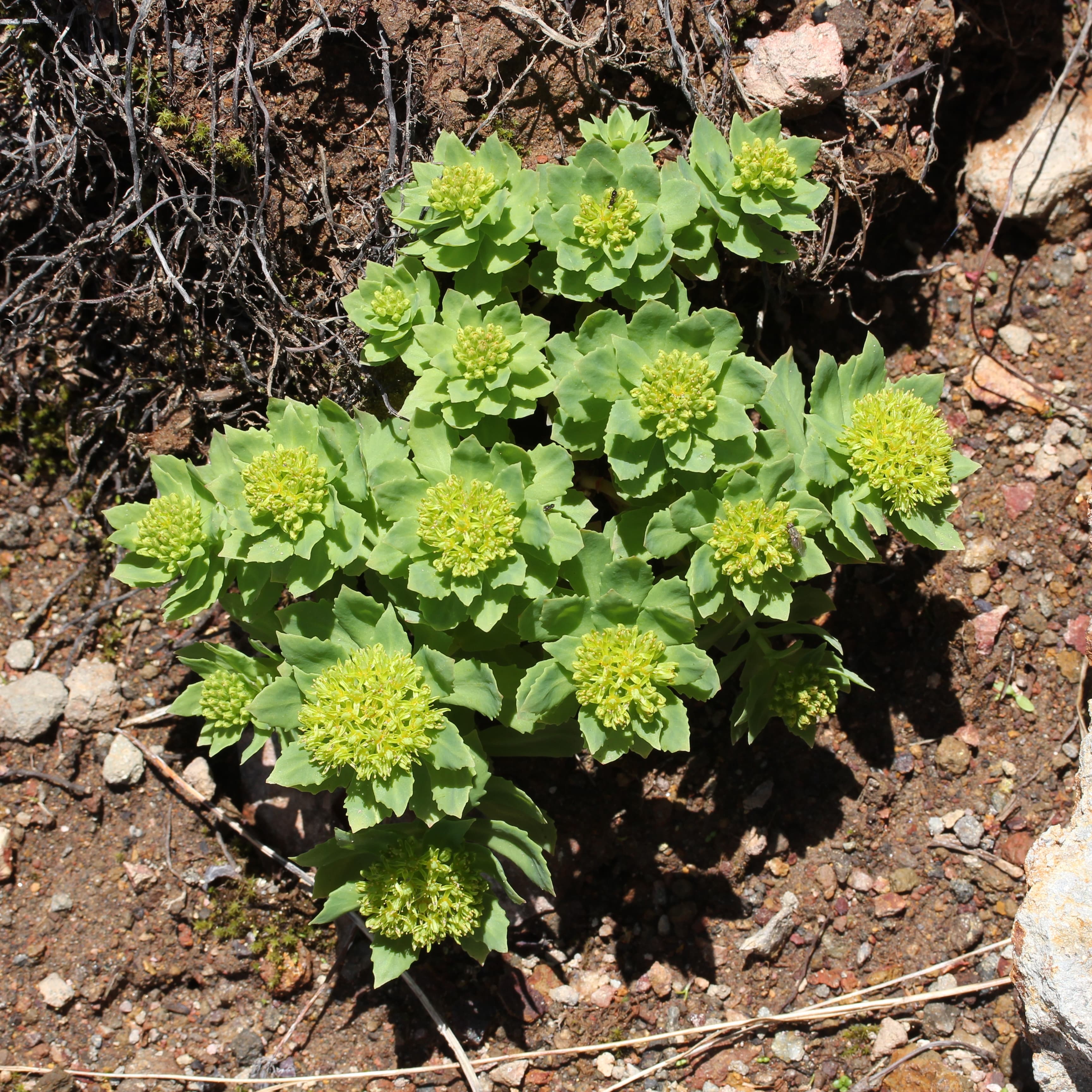
A hardy plant that survives on wind-blasted mountain cliffs turns out to have something useful to say about tired brains and tired bodies.
Rhodiola rosea grows where almost nothing else will — cracks in rock faces above the Arctic Circle, exposed ridges in Siberia and Scandinavia, places with brutal cold and thin soil. For centuries, people in these regions dug up its thick, rose-scented root and used it to cope with harsh winters and long workdays. Today it's sold in capsules at pharmacies and health food stores, marketed as an "adaptogen" — a substance claimed to help the body adapt to stress. The interesting part isn't the folklore. It's that a reasonable pile of actual clinical trials has now tested whether any of this holds up, specifically for fatigue.
What Rhodiola Actually Is
Rhodiola rosea root contains a mix of compounds, most notably salidroside and rosavins, which are believed to be responsible for its effects on the central nervous system. A 2018 lab study looked at seven commercial Rhodiola extracts and tested how salidroside and rosavin content related to activity in the hippocampus — the brain region central to memory — using a model of the synaptic changes involved in learning1. The point of that study was practical rather than exciting: not all Rhodiola products are equal, because the amount of active compound varies a lot between brands, which matters if you're trying to judge whether "Rhodiola" as a category works.
Most of the clinical evidence, though, comes from a specific standardized extract called SHR-5, made from the root and rhizome. That's worth knowing, because when people say "Rhodiola works for fatigue," they usually mean this particular, tightly controlled preparation — not just any root powder off a shelf.
The Systematic Review: What Does the Whole Body of Evidence Say?
The best starting point is a 2012 systematic review that pulled together the available randomized controlled trials on Rhodiola for physical and mental fatigue2. Researchers searched six databases and found 206 candidate articles, narrowing them down to 11 that met their quality bar — ten randomized controlled trials and one controlled clinical trial. Of the six trials that specifically examined physical fatigue, the review found supportive evidence in a majority of them, while flagging that study quality and sample sizes varied. That's the honest state of the science: multiple positive trials, but not yet an enormous, bulletproof body of research. Still, for an herbal supplement, having a formal systematic review at all puts Rhodiola ahead of most.
Stress-Related Fatigue: The Core Human Trial
The most directly relevant trial tested Rhodiola in people who were actually diagnosed with fatigue. A 2009 randomized, double-blind, placebo-controlled trial enrolled 60 adults between 20 and 55 who met Swedish national diagnostic criteria for fatigue syndrome3. Half took four tablets a day of the SHR-5 extract, totaling 576 mg daily; the other half took identical-looking placebo tablets. The researchers tracked quality of life, fatigue symptoms using a validated burnout scale, depression symptoms, and attention/concentration performance. This wasn't a trial on healthy volunteers looking for an edge — it was a trial on people who were clinically fatigued, which makes the results more meaningful for anyone dealing with persistent exhaustion rather than just an occasional sluggish afternoon.
Night Shifts and Mental Fatigue
Anyone who has worked a night shift knows the particular fog that sets in around hour eighteen of being awake. A 2000 study put this to the test directly, using a double-blind, crossover design with 56 young physicians working night duty4. Each doctor took either the SHR-5 extract or placebo at a low daily dose during two-week blocks, with a washout period in between, then switched. Researchers measured a "Fatigue Index" built from tests of associative thinking, short-term memory, calculation, concentration, and the speed of processing visual and auditory information — essentially, the mental machinery you need to make good decisions when you're exhausted and someone's life might depend on it. Because it was a crossover trial, each physician served as their own comparison, which strengthens confidence that any difference came from the extract itself rather than from who happened to be in which group.
A similar real-world population — nursing students juggling shift work and clinical rotations — was studied in a 2014 randomized, double-blinded, placebo-controlled trial at the University of Alberta5. Eighteen-to-55-year-old nursing students took 364 mg of R. rosea, or a matching placebo, at the start of their wakeful period, with an option for an extra capsule later. This trial specifically targeted the mental and physical fatigue that comes from irregular, demanding shift schedules — a population that badly needs interventions that don't involve more caffeine.
Beyond "Tiredness" — Physical Performance Under Fatigue
More recent trials have pushed into a different question: can Rhodiola blunt the performance drop that happens when your brain is already fatigued? A 2025 randomized, triple-blind, placebo-controlled crossover trial tested 18 healthy young adults performing bench-press and bench-pull exercises, either at rest or after a mentally fatiguing task called the Stroop test6. Each participant went through four sessions, mixing supplement (Rhodiola or placebo) with mental state (fatigued or not), so researchers could isolate exactly how much the herb changed strength output specifically under mental fatigue conditions — a clever design because it separates "does it help you lift more" from "does it help you lift more once your brain is already fried."
An even more applied trial looked at competitive football players. A 2026 randomized, double-blind, placebo-controlled trial gave 24 male footballers either Rhodiola or placebo for four weeks and tracked a battery of performance measures: the Yo-Yo intermittent recovery test, repeated-sprint ability, blood lactate after sprinting, passing and shooting accuracy, a video-based decision-making task, GPS running data during matches, jump height, and blood markers7. The Rhodiola group showed a significant improvement in the Yo-Yo test, outperforming placebo, and their repeated-sprint times also improved. This matters because it extends the "fatigue" conversation past subjective tiredness and depression scores into hard, measurable athletic output — sprint speed, endurance capacity, and lactate handling — in people whose job depends on real physical performance.
Formulation Matters More Than You'd Think
Two supporting studies in our review aren't clinical trials on humans, but they matter for a practical reason: they explain why "buy any Rhodiola" is bad advice. The 2018 lab study comparing seven commercial extracts found real variation in salidroside and rosavin content, and tied that variation to differences in biological activity in a hippocampal memory model1. In plain terms, the bottle on the shelf next to the one used in a clinical trial might not contain a comparable dose of the active compounds at all.
Separately, a 2025 study focused not on effectiveness but on getting people to actually take the supplement consistently. Researchers developed orally disintegrating tablets — ones that dissolve in the mouth without water — using standardized R. rosea root and rhizome extract, aiming for fast disintegration and acceptable taste to improve compliance, particularly for people who have trouble swallowing conventional tablets8. It's a reminder that even a supplement with decent trial support only works if people actually stick with it, and formulation is part of that equation.
Traditional Use
TCM
China · over 2,000 years
Chinese medicine uses a rhodiola too, and it is worth being precise about which one. The drug called hongjingtian is Rhodiolae crenulatae radix et rhizoma, the plateau species, and Chinese practice files it among the herbs that invigorate qi. Its documented clinical territory is altitude: it is one of the handful of botanicals reached for in acute mountain sickness, prescribed under the pattern of qi deficiency, where the aim is to replenish qi and nourish yin in someone whose body has been dropped into thin air faster than it can adapt9. Read from a European shelf that sounds like a match for tiredness, and the herb's own category almost invites the reading, since qi deficiency is the classical Chinese frame nearest to lassitude. But the complaint being treated is hypoxia, the plant is not the one in the capsules sold for shift work, and the two should not be quietly merged.
What the science says
PartialThere is more human data behind that altitude claim than behind the fatigue claim this article is about: nineteen randomised trials in 1,690 people, better than placebo for blood oxygen and overall improvement, though no better than the conventional drugs and rated very low certainty by the reviewers' own grading. 16
European Herbalism
Europe · centuries of folk use
The written European record splits in two, and the halves do not agree. The older half is brief. In the roots section of Culpeper's London Dispensatory of 1653 the drug appears as Rhodia radix, Rose Root, and the entry says only that pounded and laid on the head it eases the pain there, being somewhat cool in quality; Culpeper's own tables in the same book file it among the roots cold in the first degree and name it as the one root that cools the head. Nothing about stamina, nothing swallowed10,11,12. The half that matches this article is much younger and comes from the north and east — a root dug for endurance through cold and hard work, but written down as medicine only in the twentieth century. The Soviet health ministry cleared the liquid extract for medical use and factory production in 1969, and the indication recorded in that literature is asthenia and fatigue, five to ten drops before meals for two or three weeks; Sweden has had a tablet on the market since 1987. That paper trail, rather than the trials, is what the European Union herbal monograph rests on when it allows the root to be sold for the relief of symptoms of stress, such as fatigue and exhaustion, at 144 to 200 mg once or twice a day. This is genuinely a local plant, not an exotic import: the same species grows wild on the limestone and granite of the Tatras and the Malá Fatra in Slovakia, where botanical records go back half a century.
What the science says
PartialThe same committee that granted that traditional indication judged the clinical trials separately and refused the stronger "well-established use" status, calling the studies methodologically weak and the meta-analyses of them full of shortcomings — so the European licence stands on long use, not on proof. 2
Tibetan Medicine (Sowa Rigpa)
Tibet · Sowa Rigpa
Tibetan medicine has a long relationship with this genus as well, but with a different plant and for a different purpose. The rhodiola that appears in Sowa Rigpa practice is chiefly Rhodiola crenulata, gathered on the plateau between roughly 2,800 and 5,600 metres where few other medicinal plants survive at all, and the complaints recorded for it sit in the chest: coughing up blood, inflamed lungs, a cough that will not settle, alongside a set of gynaecological indications13. Tiredness as such is not what physicians reached for it. That is worth holding onto whenever a label invokes "Tibetan rhodiola" for fatigue, because the plateau tradition built its knowledge around breathing thin air, not around a demanding week at a desk — and around a species most European capsules do not contain.
What the science says
Not yet studiedNearly all fatigue trials have used Rhodiola rosea, so the lung and altitude uses recorded on the plateau sit outside what today's evidence can either confirm or contradict.
Is this for you?
What kind of tiredness are you trying to shift?
This is not medical advice — just general orientation.
What biohacking says
Biohacking
21st century · data & self-tracking
Rhodiola sits in most adaptogen stacks alongside ashwagandha and ginseng, and it carries a second reputation as a longevity compound. DrugAge holds nineteen lifespan records for rhodiola extract, the largest a 24% gain — but every one of them is in fruit flies or roundworms14,15. Not a single mammal has been tested. Supp.ai, which catalogues supplement-drug interactions from the peer-reviewed literature, does not list rhodiola at all, so nothing is known about how it behaves next to the other four capsules in the stack.
What the science says
PartialThe stack mentality gets the dose wrong in an unusual direction. Examine grades the cognition evidence an A, but notes that rhodiola shows a bell-curve response: past roughly 680 mg, higher doses may simply stop working rather than working harder. Daily use against fatigue has been reported effective from as little as 50 mg. This is the rare supplement where the community instinct to push the dose is not merely wasteful but self-defeating.
The Practical Takeaway
Across the studies here, the strongest, most consistent signal for Rhodiola rosea centers on stress-related and shift-work fatigue, and — more recently — on physical performance under conditions of mental fatigue. The clinical trials used doses in the range of roughly 360 to 576 mg per day of standardized extract, typically taken in the morning or at the start of a wakeful period3,5. If you're considering it, look specifically for a product standardized to salidroside and rosavin content, ideally matching the SHR-5-type extract used in most of the trials, since a generic "Rhodiola powder", that is rhodiola rosea extract with unverified active compound levels, may not behave the same way the tested products did1.
None of this makes rhodiola a cure for exhaustion, and the systematic review itself noted that trial quality across the field is mixed2. If your fatigue is persistent, unexplained, or affecting your daily functioning, talk to your doctor before adding any supplement — especially if you take other medications, are pregnant or breastfeeding, or have a condition affecting your heart or blood pressure, none of which were the focus of these trials. For otherwise healthy adults dealing with the specific, familiar drag of shift work, mental overload, or physical exertion, rhodiola is at least one of the better-studied herbal options on the market — which, in a category full of untested claims, counts for something.
As an Amazon Associate, Holistic Codex earns from qualifying purchases. Product recommendations are editorially independent.
Frequently Asked Questions
Medical Disclaimer: This article is for educational purposes only and does not constitute medical advice. Always consult a qualified healthcare professional before starting any supplement regimen or making changes to your diet, especially if you have a medical condition or take medications.
Sources
- 1
Dimpfel W, Schombert L, Panossian AG.. Assessing the Quality and Potential Efficacy of Commercial Extracts of Rhodiola rosea L. by Analyzing the Salidroside and Rosavin Content and the Electrophysiological Activity in Hippocampal Long-Term Potentiation, a Synaptic Model of Memory.. Frontiers in pharmacology. 2018.
Strong EvidenceEurope PMC ↗ - 2
Ishaque S, et al.. Rhodiola rosea for physical and mental fatigue: a systematic review.. BMC complementary and alternative medicine. 2012.
Strong EvidencePubMed ↗ - 3
Olsson EM, et al.. A randomised, double-blind, placebo-controlled, parallel-group study of the standardised extract shr-5 of the roots of Rhodiola rosea in the treatment of subjects with stress-related fatigue.. Planta medica. 2009.
Strong EvidencePubMed ↗ - 4
Darbinyan V, et al.. Rhodiola rosea in stress induced fatigue--a double blind cross-over study of a standardized extract SHR-5 with a repeated low-dose regimen on the mental performance of healthy physicians during night. Phytomedicine : international journal of phytotherapy and phytopharmacology. 2000.
Strong EvidencePubMed ↗ - 5
Punja S, et al.. Rhodiola rosea for mental and physical fatigue in nursing students: a randomized controlled trial.. PloS one. 2014.
Strong EvidencePubMed ↗ - 6
Marcos-Frutos D, et al.. The Impact of Rhodiola Rosea Extract on Strength Performance in Alternative Bench-Press and Bench-Pull Exercises Under Resting and Mental Fatigue Conditions: A Randomized, Triple-Blinded, Placebo-Con. Nutrients. 2025.
Strong EvidencePubMed ↗ - 7
Dou Y, et al.. Effects of Rhodiola rosea on Physical and Decision-Making Performance in Football Players: A Randomised Controlled Trial.. Nutrients. 2026.
Strong EvidencePubMed ↗ - 8
Brante O, Bagons RT, Niedra S, Mazurs A, Mauriņa B, Bernatoniene J, Logviss K.. Development of Orally Disintegrating Tablets of Standardized Rhodiola rosea Extract.. Pharmaceuticals (Basel, Switzerland). 2025.
Strong EvidenceEurope PMC ↗ - 9
Wu Z, et al.. Potential therapeutic effects of traditional Chinese medicine in acute mountain sickness: pathogenesis, mechanisms and future directions.. Frontiers in pharmacology. 2024.
Strong EvidencePubMed ↗ - 10
Wellcome Collection — classical source text
- 11
Wellcome Collection — classical source text
- 12
Wellcome Collection — classical source text
- 13
Ning WY, Huang Y, Li G, Wang M, Ma M, Lin PC, Meng XH.. Research progress from traditional medicine to chemical composition, pharmacological activity, and clinical application of Rhodiola crenulata.. Journal of ethnopharmacology. 2026.
Strong EvidenceDOI ↗ - 14
Schriner SE, et al.. Decreased mitochondrial superoxide levels and enhanced protection against paraquat in Drosophila melanogaster supplemented with Rhodiola rosea.. Free radical research. 2009.
Strong EvidencePubMed ↗ - 15
Wiegant FA, et al.. Plant adaptogens increase lifespan and stress resistance in C. elegans.. Biogerontology. 2009.
Strong EvidencePubMed ↗ - 16
Gao Z, et al.. Efficacy and safety of Rhodiola crenulata extract in the treatment of acute high altitude disease, based on studies involving populations in China: A systematic review and meta-analysis.. Frontiers in pharmacology. 2025.
Strong EvidencePubMed ↗


