Overview
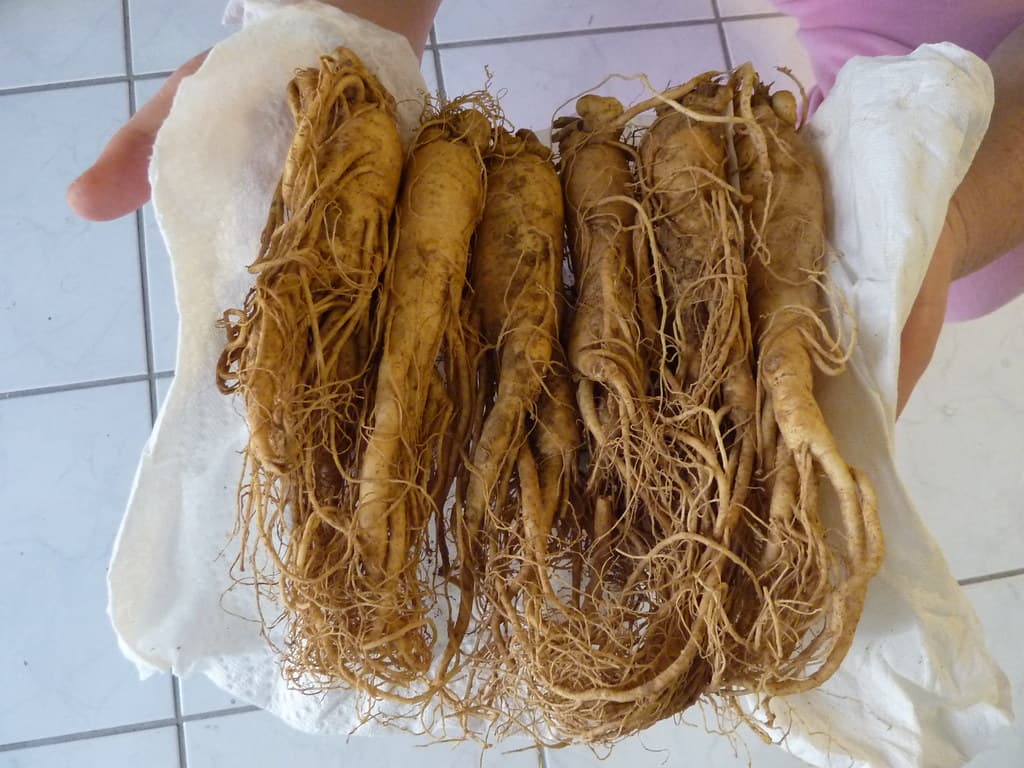
Korean ginseng (Panax ginseng, often processed into "Korean Red Ginseng" by steaming and drying) is a root long used across East Asia as a general tonic. Its active compounds are called ginsenosides, plant molecules that get broken down by digestive enzymes and gut bacteria into metabolites before your body can use them1.
Modern trials have tested it for fairly specific problems rather than as a cure-all. In people with rheumatic diseases like Sjögren's syndrome and rheumatoid arthritis, 2 g/day of Korean Red Ginseng improved fatigue scores over 12 weeks compared to placebo2, and a separate crossover trial in rheumatoid arthritis patients found the same 2 g/day dose did not worsen disease activity, addressing a theoretical concern that its immune-stimulating effects could flare autoimmune symptoms3. In children with subthreshold ADHD (attention-deficit/hyperactivity disorder symptoms below the full diagnostic threshold), a combination of omega-3 and Korean red ginseng improved ADHD rating scale scores over 12 weeks versus placebo, though this tested a combined product rather than ginseng alone4. In adults with type 2 diabetes and high blood pressure, a blend of Korean Red Ginseng and American ginseng enriched with a specific ginsenoside (Rg3) was studied for its effects on blood vessel stiffness and function over 12 weeks5.
Is this for you?
Why are you considering Korean ginseng?
This is not medical advice — just general orientation.
Safety
- In a crossover trial of 80 women with rheumatoid arthritis, 2 g/day of Korean Red Ginseng for 8 weeks did not significantly worsen disease activity and did not show a meaningful increase in adverse events compared to placebo3. A separate 24-week trial in patients with rheumatic diseases (Sjögren's syndrome and/or rheumatoid arthritis) also used 2 g/day without reporting safety concerns that changed the study's conclusions2. Beyond these two trials in specific rheumatic-disease populations, the reviewed studies do not report a broader profile of side effects, contraindications, or who should avoid Korean ginseng — including no data here on pregnancy, breastfeeding, or use in the general healthy population. A pharmacokinetic review notes that ginsenoside metabolites can affect drug-metabolizing enzymes and transporters in the body, which is a mechanism for interactions rather than a direct safety finding in people1.
Dosage
Studies used 2 g/day of Korean Red Ginseng in patients with rheumatic diseases, taken over 12 weeks (with an additional 12-week open-label extension in one trial) for fatigue2, and 2 g/day over 8 weeks (with crossover to a second 8-week phase) in rheumatoid arthritis patients for disease-activity safety monitoring3. In a trial combining ginseng with omega-3 for children with subthreshold ADHD, the combined product was given over 12 weeks, but the ginseng dose alone was not separately reported4. In adults with type 2 diabetes and hypertension, a ginsenoside Rg3-enriched blend of Korean Red Ginseng and American ginseng was given at 2.25 g, three times daily, for 12 weeks5. These are the doses used in specific clinical trial populations, not general recommendations.
Where to find it
As an Amazon Associate, Holistic Codex earns from qualifying purchases. Product recommendations are editorially independent.
Interactions
A pharmacokinetic review of Korean ginseng found that ginsenosides and their metabolites, produced by digestive and bacterial breakdown of the root in the gut and liver, can act on drug-metabolizing enzymes and drug transporters — the systems the body uses to process many prescription medications1. This same review specifically flagged that ginseng is increasingly taken alongside prescription medicines and examined the resulting interaction potential, though our review does not name specific drug classes tested in human interaction trials. No other interaction data was found in the reviewed studies.
Traditional Use
TCM
China · over 2,000 years
Ethnobotanical records from China document 59 distinct traditional uses of Panax ginseng — more than any other country surveyed. Recurring themes are tonifying and restorative indications: treatment of anemia, use as an aphrodisiac, for asthma, and for cachexia (severe wasting and weakness), alongside its general reputation as a whole-body tonic. Additional records from Russia, part of the same Far Eastern range where the species grows, describe use as a heart tonic, a calming agent, and for diabetes.
What the science says
PartialThe reviewed clinical trials support a narrower slice of this — improved fatigue in chronically ill patients and effects on blood vessel function in diabetes with hypertension — rather than confirming the full historic range of tonic and restorative claims.
Japanese Kampo
Japan · since the 7th century
Japan's National Diet Library catalogs over three hundred titles related to the formula 人参湯 (Ninjinto, "ginseng decoction"), a classical prescription descended from the Chinese Shang Han Lun. Ginseng is the core herb of this Kampo (Japanese herbal medicine) formula, which is traditionally used for conditions of "cold" and weakness in the digestive tract. USDA ethnobotanical records also list Japanese uses of ginseng as an intestinal remedy, stomach tonic, and general tonic7.
What the science says
Not yet studiedNone of the reviewed clinical trials tested Ninjinto or ginseng specifically for digestive "cold" patterns as used in Kampo, so this traditional application remains unstudied by modern research in our review.
Korean Medicine
Korea · Dongui Bogam (1613)
In the Dongui Bogam (東醫寶鑑), a foundational 1613 text of Korean medicine compiled by Heo Jun, ginseng (人參) appears at 624 separate points — the densest coverage of any single drug in the entire text. It is not a minor entry but one of the pillars of Korean materia medica, appearing in longevity formulas alongside rehmannia root, poria, and honey, and on its own as a simple decoction called 人參湯 used to help other remedies take effect. Ginseng also held a unique non-medical status in Korea: its cultivation and trade were a state monopoly6.
What the science says
PartialModern trials specifically testing Korean Red Ginseng in Korean patients with fatigue and chronic illness (rheumatic disease) found measurable improvement in fatigue scores, aligning with its historic role as a strengthening tonic, though the classical text's much broader claims (longevity, general vitality) remain untested.
European Herbalism
Europe · centuries of folk use
Ginseng reached Europe early: the European Medicines Agency's assessment report, citing Madaus's 1938 textbook of medicinal plants, dates its arrival through the Netherlands to 1610. The English herbals of that century never took it up, though — Gerard (1633), Parkinson (1640) and Pechey (1694) have no entry for it, and neither does Culpeper's herbal of 16538. Today, Europe's medicines regulator (EMA) recognizes ginseng root under a "traditional use" category, meaning preparations may be marketed for the symptomatic relief of asthenia — tiredness and weakness — based on long-standing use rather than clinical trial evidence, as the agency explicitly states.
What the science says
PartialThis traditional "for fatigue and weakness" indication is partially echoed by modern trials showing improved fatigue scores with Korean Red Ginseng in patients with chronic rheumatic illness, though the EMA's own recognition rests on historical use, not on these specific trial results.
Tibetan Medicine (Sowa Rigpa)
Tibet · Sowa Rigpa
This is the one entry on this page where even the plant's name is disputed — and the dispute is more interesting than the answer. The Tibetan canon has a drug called དཀར་པོ་ཆིག་ཐུབ། dkar po chig thub, literally "the white one that suffices alone." The modern Sowa Rigpa materia medica dataset identifies it as Panax ginseng, precisely the plant this profile is about11; Dashiev's Russian translation of the Four Tantras lists it in its index as "false ginseng," Panax pseudo-ginseng. The canon separately carries glang chen chig thub = P. notoginseng. All that is certain is the genus Panax — which species, two serious modern readings do not agree.
What the science says
Not yet studiedWhat decides the entry is something else: what it is used for. In Korea ginseng is the sovereign tonic and appears at 624 points in the Dongui Bogam; in the Tibetan text it does nothing of the kind. It sits among the antidotes — it gathers poisons and suppresses the gnyan diseases and worms — and together with oxytropis and elecampane it treats gag and lhog, the throat and swelling disorders (Dashiev 1988). The same plant, or a close relative, was given the opposite job across the mountains: not to supply strength, but to draw out poison. No study in our review tested ginseng as an antidote.
What biohacking says
Biohacking
21st century · data & self-tracking
Korean red ginseng sits in most "energy and vitality" stacks and is one of the few traditional herbs with a genuinely large modern trial record — which makes what that record says all the more worth stating plainly. Examine covers ginseng across 67 references and 9,352 participants in 55 trials and 3 meta-analyses, and not one outcome reaches its top evidence grade. The best it manages is ten outcomes at the second grade, led by overall cancer risk, with seventeen at the third and eighteen at the lowest (Examine.com). Fifty-five trials and no top grade is a different kind of result from "not enough research" — it means the research exists and lands short. On dosing, trials generally use 200 to 400 mg of an extract standardized to roughly 4 to 10 percent ginsenosides once daily, with 400 mg associated with the clearest cognitive effect, while erectile and libido trials typically use around 3 grams of Korean red ginseng extract. The longevity claim is weaker still: DrugAge holds nine entries, and the mouse results are all statistically non-significant, ranging from minus 2 to plus 9 percent9; only the fruit fly arms reached significance10.
What the science says
PartialGinseng is worth checking against your medicine cabinet before your supplement shelf: Supp.ai documents 183 interactions for it, one of the higher counts among common herbs, and that is the practical reason to raise it with a doctor rather than any doubt about whether it does something.
Evidence Strength
Korean ginseng, and specifically Korean Red Ginseng, has been tested in several randomized, placebo-controlled human trials rather than relying only on tradition or animal research. The strongest, most consistent finding is improved fatigue scores in patients with chronic rheumatic illness across two related trials, plus reassuring safety data showing 2 g/day did not worsen rheumatoid arthritis activity. Findings on ADHD symptoms in children and vascular effects in diabetes with hypertension come from single trials, often testing ginseng combined with another ingredient, so they need independent confirmation before being considered established.
Frequently Asked Questions
Medical Disclaimer: This article is for educational purposes only and does not constitute medical advice. Always consult a qualified healthcare professional before starting any supplement regimen or making changes to your diet, especially if you have a medical condition or take medications.
Sources
- 1
Park JD.. Metabolism and drug interactions of Korean ginseng based on the pharmacokinetic properties of ginsenosides: Current status and future perspectives.. Journal of ginseng research. 2024.
Strong EvidenceEurope PMC ↗ - 2
Cho SK, et al.. Effectiveness of Korean Red Ginseng on fatigue in patients with rheumatic diseases: a randomized, double-blind, placebo-controlled study.. The Korean journal of internal medicine. 2024.
Strong EvidencePubMed ↗ - 3
Cho SK, Kim D, Yoo D, Jang EJ, Jun JB, Sung YK.. Korean Red Ginseng exhibits no significant adverse effect on disease activity in patients with rheumatoid arthritis: a randomized, double-blind, crossover study.. Journal of ginseng research. 2018.
Strong EvidenceEurope PMC ↗ - 4
Lee J, et al.. Efficacy of Omega-3 and Korean Red Ginseng in Children with Subthreshold ADHD: A Double-Blind, Randomized, Placebo-Controlled Trial.. Journal of attention disorders. 2021.
Strong EvidencePubMed ↗ - 5
Jovanovski E, et al.. Vascular effects of combined enriched Korean Red ginseng (Panax Ginseng) and American ginseng (Panax Quinquefolius) administration in individuals with hypertension and type 2 diabetes: A randomized c. Complementary therapies in medicine. 2020.
Strong EvidencePubMed ↗ - 6
Korean Wikisource — classical source text
- 7
NDL Search — classical source text
- 8
Wellcome Collection — classical source text
- 9
Bittles AH, et al.. The effect of ginseng on lifespan and stress responses in mice.. Gerontology. 1979.
Strong EvidencePubMed ↗ - 10
Kim MS. Korean Red Ginseng Tonic Extends Lifespan in D. melanogaster.. Biomolecules & therapeutics. 2013.
Strong EvidencePubMed ↗ - 11
Wangyal R, et al.. Dataset of materia medica in Sowa Rigpa: Tibetan medicine botanicals and Gawe Dorje's classification system.. Data in brief. 2020.
Strong EvidencePubMed ↗