This warming spice has soothed bloated, cold, sluggish bellies across seven healing traditions, and modern gut research is finally starting to peek inside to see why.
Key takeaways
- Seven independent healing traditions, from China to Tibet to medieval Europe, all reached for cinnamon bark for the same problem: a cold, sluggish, bloated digestive system.
- A 2016 pilot study using a swallowable gas sensor found that dietary cinnamon lowered stomach carbon dioxide in pigs, linked to reduced gastric acid and pepsin secretion.
- There are no modern human clinical trials on cinnamon for digestion in our review. Everything here rests on centuries of traditional use, plus one animal pilot study.
- Cinnamon oil has documented interactions with several compounds, so check with your doctor before combining it with other supplements or medications.
- Most traditions describe cinnamon as "warming" for a "cold" stomach, an old but consistent framework for what we might now call sluggish digestion or bloating.
A spice with a very specific job
Long before cinnamon sat in a jar next to your coffee mug, it was medicine for one particular complaint: a stomach that felt cold, heavy, and reluctant to do its job. Chinese physicians, Tibetan healers, Ayurvedic scholars, and European herbalists, working centuries apart and without contact, kept landing on the same bark for the same picture: bloating, gas, poor appetite, sluggish belching, sometimes cramping or loose stools. That kind of independent convergence is unusual enough to be worth a closer look.
How it's thought to work
Traditional systems frame cinnamon as "hot" or "warming," a way of describing a spice that seems to rev up a stalled digestive process. In modern terms, one small piece of that picture has actually been measured. A 2016 study built a swallowable gas sensor capsule to track real-time gas levels inside the stomach1. Using a pig model, the researchers found that feeding normally raised gastric carbon dioxide, a by-product of the fermentation and acid-driven digestive process. Dietary cinnamon reduced that CO2 rise, and the researchers linked this to decreased gastric acid and pepsin secretion, the enzyme that starts breaking down protein in the stomach. Under added heat stress, cinnamon dropped gas levels even further. It's a mechanical hint, in animals, for something traditional healers described in entirely different language: a stomach being "settled" rather than left to churn.
Is this for you?
Why are you considering cinnamon for your gut?
This is not medical advice — just general orientation.
What the research actually shows
Here's the honest state of the science: our review contains no modern human clinical trials testing cinnamon for digestion or gut health. What it does contain is one animal pilot study and a deep well of traditional medical records. The 2016 gas-sensor study1 is genuinely interesting as a proof-of-concept for measuring gut gas in real time, and its finding that cinnamon reduced gastric acid and pepsin secretion in pigs offers a plausible mechanism for the "settling" effect traditions describe. But it was done in pigs, not people, and it was a pilot study designed mainly to test the sensor technology itself, not to establish a digestive health claim. Any leap from "reduced gastric CO₂ in a pig" to "cinnamon soothes your bloating" is a leap the current evidence can't fully support yet. What can be said honestly is that human evidence is still limited, and the strongest case for cinnamon and digestion right now comes from its extraordinarily consistent traditional use, not from clinical trial data.
Ayurveda
India · over 3,000 years
In the Bhavaprakasha Nighantu, cinnamon bark (Twak/Dalchini) is placed in the Karpuradi Varga and prized as a warming digestive ally, its heating potency said to kindle a sluggish digestive fire (agni) and burn off undigested residue (ama). Healers turned to it for weak digestion, indigestion, bloating, and loss of appetite, and it also earned a place among the classical aromatic blends Trijataka and Chaturjataka as a go-to carminative for trapped gas5.
What the science says
Not yet studiedBloating and gas are precisely what the modern study measured — and it measured them in pigs1. No human trial has tested cinnamon on agni, on ama, or on indigestion itself.
TCM
China · over 2,000 years
For centuries, Chinese practitioners have reached for rou gui, the warming bark of Chinese cinnamon (Cinnamomum cassia), to chase the chill out of a cold, sluggish middle. When someone complains of an icy ache in the upper belly, bloating, belching, poor appetite, and a general aversion to cold, this is the classic picture of deficiency-cold in the spleen and stomach that rou gui is traditionally called upon to warm and set moving again2.
What the science says
Not yet studiedNo human trial has tested rou gui for a cold, sluggish middle. The one modern measurement is a pilot study in pigs, where dietary cinnamon lowered gastric acid, pepsin and stomach gas1 — a laboratory hint that touches one corner of what "warming the cold middle" is meant to cover.
Japanese Kampo
Japan · since the 7th century
In Kampo practice, Keishikashakuyakuto is the go-to remedy when abdominal pain calls for soothing, and cinnamon bark earns its place as the second-largest ingredient in the blend. Paired with peony root, jujube fruit, licorice, and ginger, it reflects the tradition's layered approach to easing belly discomfort through combined botanicals rather than a single herb alone3.
What the science says
Not yet studiedKeishikashakuyakuto has not been through a human trial for abdominal pain in our review, and the one modern study tested cinnamon on its own, in pigs1 — which is exactly how Kampo never uses it, since the bark only ever appears inside a formula.
Korean Medicine
Korea · Dongui Bogam (1613)
In Hanbang, cinnamon bark (gyepi) is prized as a warming remedy for a chilled, sluggish digestive system. Practitioners reach for it when the spleen-stomach is deficient and invaded by cold, causing icy chest-and-abdominal pain or bouts of vomiting with diarrhea. The Dongui Bogam (1613) wove it into 142 formulas, including versions of Yijung-tang and Gyechul-tang for fullness and a rumbling stomach, describing cinnamon bark as something that "warms the middle and frees the blood vessels," while cinnamon-heart was said to specifically halt cold-type internal abdominal pain6.
What the science says
Not yet studiedA hundred and forty-two formulas is a remarkable amount of accumulated use, but accumulated use is not a trial: cinnamon has never been tested in people for a cold, deficient spleen-stomach, and the only modern measurement remains the pig study1.
Unani
Greco-Persian lineage · since Avicenna
Unani physicians class Darchini (cinnamon) cinnamon bark as hot-and-dry in temperament, valued for waking a sluggish stomach and clearing trapped wind. Whether steeped as an infusion, simmered into a decoction, ground into powder, or pressed into oil, the bark has long been handed to those suffering from dyspepsia, flatulence, diarrhea, or vomiting as a warming digestive and stomach tonic4.
What the science says
Not yet studiedThe trapped wind Unani describes is the same complaint the modern study measured as stomach gas1 — but it measured it in pigs, and no human trial has tested cinnamon as a stomach tonic.
European Herbalism
Europe · centuries of folk use
Long before it graced spice racks, cinnamon bark was steeped as a warming remedy for troubled bellies, the kind of after-meal fullness, gas, and cramping that herbalists across generations learned to soothe with its aromatic bark. This same long-standing use also had it doubling as a gentle aid for mild diarrhea. The European Medicines Agency's recognition of cinnamon as a traditional herbal medicinal product rests entirely on this heritage of customary use, not on modern trial data.
What the science says
PartialThis is the only card here that rests on anything official: a European regulator has looked at cinnamon bark for digestive complaints and accepted it. What it accepted, though, is documented long-standing use, explicitly not clinical data — the tradition is recognised, the effect is not.
Tibetan Medicine (Sowa Rigpa)
Tibet · Sowa Rigpa
Tibetan healers reach for shing tsha, or cinnamon, when the stomach's rLung (wind) has fallen out of balance, brewing it into the compound formula Shing-mngar 6 to settle queasy, cold-churned bellies. Classical texts describe the bark as dispelling "cold-wind" lodged in the stomach, its warming nature said to rekindle digestive fire and calm nausea and vomiting from within (Tsarong, Handbook of Traditional Tibetan Drugs, 1986, formula Shing-mngar 6).
What the science says
Not yet studiedShing-mngar 6 has never been through a clinical trial, and neither has cinnamon for nausea in people. The "cold-wind" language happens to line up with reduced stomach gas in pigs1, which is an echo rather than a confirmation.
Safety
- Cinnamon oil has documented interactions with several compounds, including glutathione, allopurinol, doxorubicin hydrochloride, and clove oil, based on supplement safety literature.
- Talk to your doctor before combining cinnamon supplements or oil with other medications or antioxidant supplements, especially chemotherapy drugs like doxorubicin.
- No modern human dosing trials for digestion exist in current research, so no clinical dose can be confidently recommended here.
What biohacking says
Biohacking
21st century · data & self-tracking
Gut protocols reach for cinnamon as a warming, antimicrobial spice, and the community has one genuinely useful obsession about it: which species is in the jar. Ceylon and cassia are sold under the same word, and they are not interchangeable. DrugAge shows why caution is reasonable even at the level of isolated molecules — cinnamon extract lengthened fruit-fly life, but supercinnamaldehyde shortened it in roundworms7.
What the science says
PartialThe species question is the right one to ask, and it turns on coumarin. Examine states plainly that cinnamon's coumarin content gives it the potential to interact negatively with blood-thinning medications and with drugs that stress the liver — which is a different order of concern from a spice sprinkled on porridge, and applies to daily capsules rather than to cooking. This is one case where the biohacking habit of reading the Latin name on the label is simply good practice.
Where this leaves you
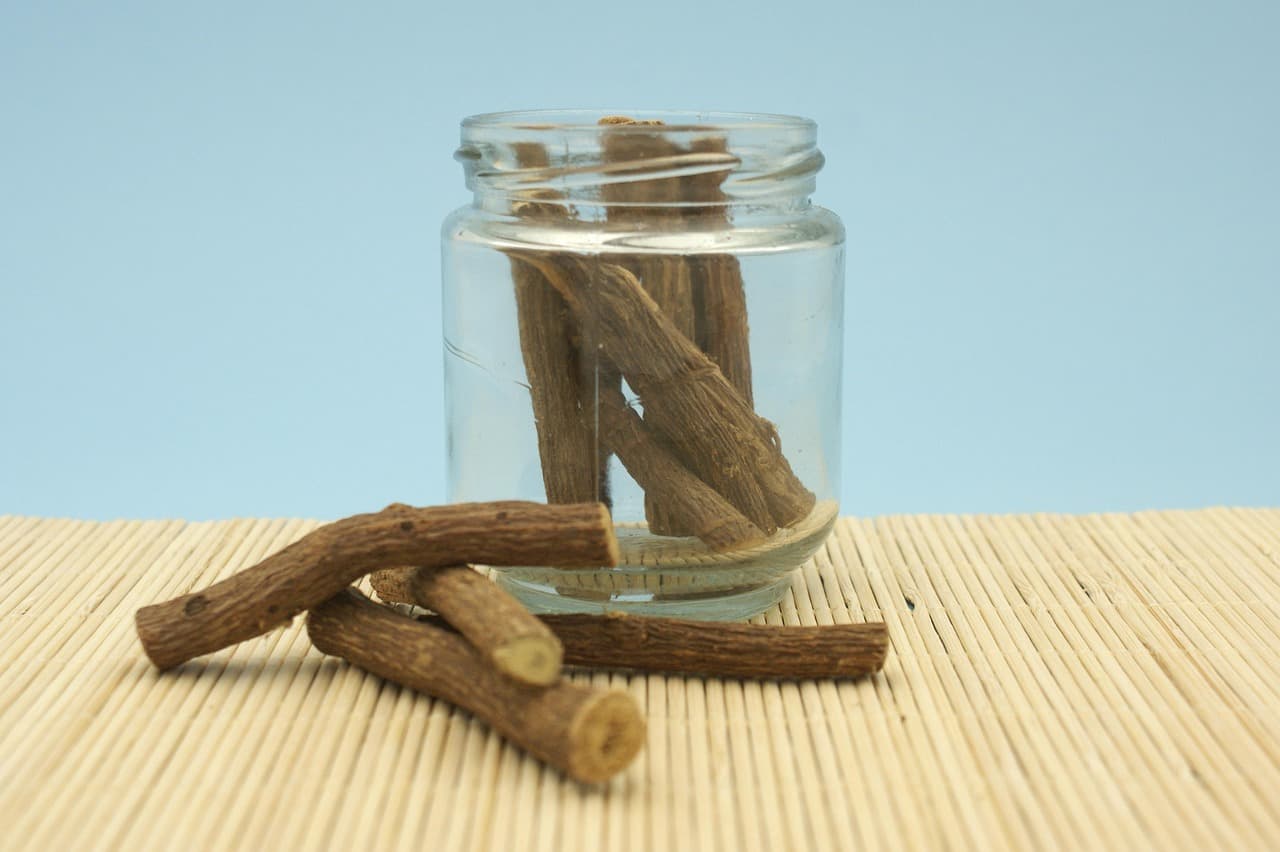
If you're drawn to cinnamon for a bloated, sluggish-feeling stomach, you're in good company across an unusually wide swath of human history. Most traditions used the bark itself, as an infusion, decoction, powder, or in cooking, rather than as a concentrated extract, and folded it into food or tea rather than treating it as a standalone medicine4. That's a reasonable, low-risk way to try it: a stick of cinnamon stick simmered into tea, or ground cinnamon stirred into food.
Be more careful with concentrated forms like cinnamon oil or cinnamon extract supplements, given the documented interactions above. If you're on medication, especially anything involving antioxidant therapy or chemotherapy drugs, talk to your doctor before adding cinnamon oil or extract to your routine. And keep expectations honest: this is a spice with an impressively consistent traditional resume, not one backed yet by human clinical trials for digestion.
As an Amazon Associate, Holistic Codex earns from qualifying purchases. Product recommendations are editorially independent.
Frequently Asked Questions
Medical Disclaimer: This article is for educational purposes only and does not constitute medical advice. Always consult a qualified healthcare professional before starting any supplement regimen or making changes to your diet, especially if you have a medical condition or take medications.
Sources
- 1
Ou JZ, Cottrell JJ, Ha N, Pillai N, Yao CK, Berean KJ, Ward SA, Grando D, Muir JG, Harrison CJ, Wijesiriwardana U, Dunshea FR, Gibson PR, Kalantar-Zadeh K.. Potential of in vivo real-time gastric gas profiling: a pilot evaluation of heat-stress and modulating dietary cinnamon effect in an animal model.. Scientific reports. 2016.
Limited EvidenceEurope PMC ↗ - 2
Liu S, et al.. A review: the botany, ethnopharmacology, phytochemistry, pharmacology of Cinnamomi cortex.. RSC advances. 2021.
Limited EvidencePubMed ↗ - 3
Oka T, et al.. Effects of Kampo on functional gastrointestinal disorders.. BioPsychoSocial medicine. 2014.
Limited EvidencePubMed ↗ - 4
Ahmad S, et al.. A Review of Darchini (Cinnamomum zeylanicum) in Unani Medicine with Therapeutic Benefits and other Pharmacological potential. Journal of Drug Delivery and Therapeutics. 2024.
Limited EvidenceOpen Access ↗ - 5
Bansode A, et al.. Karpuradi Varga as described in Bhavaprakasha Nighantu: A review. Journal of Pharmacognosy and Phytochemistry. 2026.
Limited EvidenceOpen Access ↗ - 6
Korean Traditional Knowledge Portal — classical source text
- 7
Lombard DB, et al.. High-throughput small molecule screening reveals Nrf2-dependent and -independent pathways of cellular stress resistance.. Science advances. 2020.
Limited EvidencePubMed ↗