Wellness marketing invokes ancient authority constantly, and almost nobody checks it. We opened the primary texts — Culpeper's herbal of 1653, the Sushruta Samhita, Li Shizhen's Bencao Gangmu, the Dongui Bogam and the Tibetan canon — and looked up five of those claims.
"Ancient wisdom" is the most durable phrase in the wellness aisle. It is also almost never checked, because checking it is tedious: you have to find the book, and the book is four hundred years old, or it is in classical Chinese, or it exists only as a Russian translation of a Tibetan manuscript.
We spent a day doing exactly that. Not asking whether these remedies work — that is a separate question with its own evidence — but asking a narrower and stranger one: when a product invokes a tradition, does that tradition actually say what it is being credited with?
Five answers. All of them from the primary texts, all of them checkable by you.
Valerian and sleep: the association is younger than you think
Search for valerian's history and Google's first page offers you "the ancient herb Hippocrates swore by." Valerian for sleep is sold as one of the oldest ideas in herbal medicine.
So we opened Nicholas Culpeper's herbal of 1653, The English Physitian Enlarged, which as the later Complete Herbal shaped English herbalism, and read the entry for garden valerian1.
Culpeper knows the plant well. He puts it under Mercury, credits it with a "warming faculty," and lists what it is for at length: it provokes urine and helps the stranguary; it takes away pains of the sides and brings on menstruation; boiled with liquorice, raisins and aniseed it is "singular good for those that are short winded, and for those that are troubled with the cough"; it is given for the bites of venomous creatures; it is "of special virtue against the plague"; it expels wind in the belly; bruised and laid on the head it eases pain; boiled in white wine and dropped into the eye it clears dimness of sight; it draws splinters out of the flesh.
Not one of them is sleep. The words sleep, insomnia, sedative, calming and nerve do not appear in the entry at all.
The sleep association is not ancient in English herbalism — it is datable. It appears in King's American Dispensatory of 1898 and Felter's Eclectic Materia Medica of 1922, where valerian is reclassified as a nervous-system remedy. That is roughly a century and a half ago, not two thousand years.
And there is a second problem, which is botanical rather than historical. Chinese materia medica does have a valerian: Li Shizhen describes it in the Bencao Gangmu of 1596 as 蜘蛛香, "spider fragrance" — a root from the Songpan mountains of western Sichuan, black with coarse whiskers, shaped like a spider, aromatic, and, he adds, "it is said that cats like to eat it"2. What he assigns it to is not sleep. It wards off epidemic pestilence, malign influences and corpse-infusion. It is a remedy for plague and possession.
That is a different species from the European plant. Tibetan medicine knows a third, and Ayurveda a fourth. The Tibetan canon is not silent about sleeplessness either — it names what to use against it, and the list is milk, curd, chang, meat, broth, and oil rubbed into the head. Valerian is not on it (Dashiev's Russian translation of the rGyud bzhi, 1988).
Valerian is not one plant the world disagrees about. It is four plants that a translator folded into one word.
The warm bath before bed: the tradition says the opposite
The evening bath is routinely described as a bathing ritual, with the implication of long practice behind it. The modern evidence for it is real — warm bathing one to two hours before bed does help sleep onset3. The question is only whether tradition taught it.
The Sushruta Samhita, the classical Ayurvedic surgical compendium, devotes a passage of its hygiene chapter to bathing. It says bathing "removes somnolence, (inordinate) bodily heat and a sense of fatigue," and a few clauses later that it "destroys drowsiness and sin"4. Bathing is placed in the waking routine. The same passage is oddly specific in the other direction as well: cold water on the head invigorates the sight, while pouring warm water on the head "tends to injure the eye-sight," permitted only as a medicine for disorders of vata and kapha.
Tibetan medicine goes further. Its canon mentions bathing some eighty times, much of it therapeutic — but where it pairs bathing with sleep, it does so as a warning. Bathing appears in a list of habits that disturb the body, next to daytime sleep, lying on damp ground and dressing too lightly; and again among the things forbidden during oil therapy, next to exertion, horseback riding and daytime sleep.
Two independent traditions looked at the evening bath and filed it under things to be careful with. The modern advice is genuinely modern.
Cinnamon and blood sugar: nobody claimed it first
This one is different, and the difference matters.
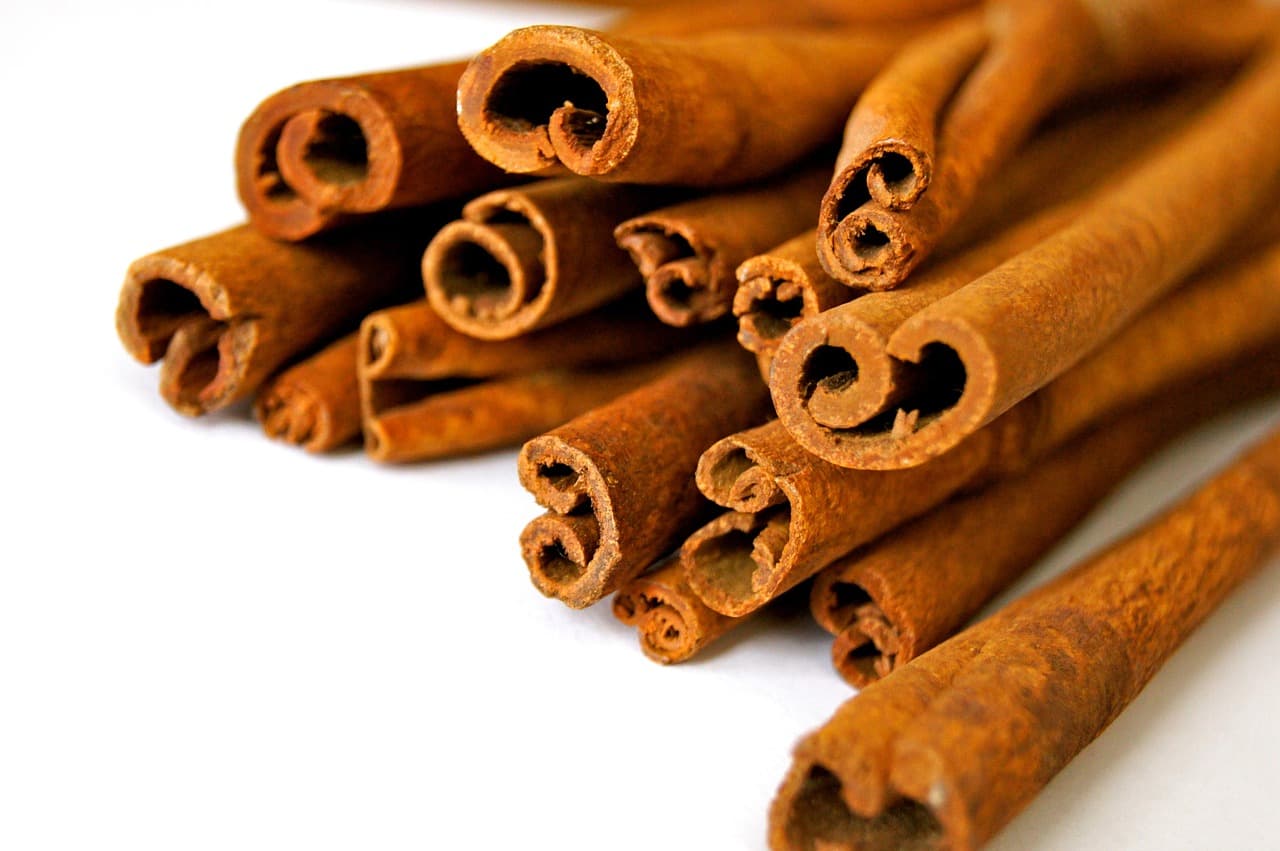
Cinnamon for blood sugar is not usually sold as ancient. It is sold on modern trials. But the assumption underneath — that a spice this widely used must have been used for this — is worth testing, because five traditions knew cinnamon intimately and all five had a name for the disease.
Chinese medicine calls it 消渴, wasting thirst, and Li Shizhen indexed his entire materia medica by disease. His entry for wasting thirst runs to nearly five thousand characters and lists dozens of drugs sorted into categories, naming trichosanthes root as the essential one. Cinnamon appears in it zero times — while the same author gives cinnamon 285 mentions in his volume on trees.
In Ayurveda the disease is prameha, and the Sushruta Samhita gives it a long section: khadira wood, amalaka, neem, turmeric, the Surasadi and Nyagrodhadi groups. Cinnamon appears once in the entire work, and it is an ingredient burned to purify poisoned air.
Korean medicine calls it sogal, and the Dongui Bogam of 1613 treats it with rehmannia, ginseng and ophiopogon — mentioned forty-four, thirty-nine and twenty-five times in that section respectively. Cinnamon is not absent there; it appears nine times, mostly as the twig rather than the bark, which is a different drug. Present, but never the answer.
Tibetan medicine counts urine-wasting among its nineteen scattered diseases and gives it a chapter. What it names against it is emblic, turmeric and barberry. Its cinnamon, meanwhile, appears thirty-five times and every time in the company of cold and digestion — bloating, belching, hiccup, diarrhoea.
And European herbalism? Culpeper's cinnamon "strengthens the stomach, helps digestion, causeth a sweet breath"5. He knows the word diabetes — his London Dispensatory glosses it as "continual pissing," which is not our disease but its nearest neighbour — and what he gives for it is the ashes of a burnt sheep's or goat's bladder, to which the enlarged edition of 1654 adds a flayed mouse dried and beaten into powder6,7. Cinnamon is not among his remedies for it.
Five traditions, five separate diagnoses, five different shelves of herbs. Cinnamon on none of them.
This is not a debunking, and it should not be read as one. It is a finding about novelty: the modern idea has no traditional precedent at all. When five independent systems that used a plant constantly never pointed it at a disease they all recognised, that is not proof the modern claim is wrong — but it is the removal of a support the claim is often assumed to have.
Comfrey: the tradition retracted it itself
Comfrey is "knitbone," and its reputation is exactly what the folk name says. Culpeper is emphatic: applied outwardly, the root is "especial good for ruptures and broken bones," and it is said to be so powerful "that if they be boiled with dissevered pieces of flesh in a pot, it will join them together again"8. His London Dispensatory of 1653 adds: "The water of Comfrey solders broken bones, being drunk helps ruptures"9.
What is unusual here is what happened next. In 1922, Harvey Wickes Felter — writing inside the same herbal tradition, in the Eclectic Materia Medica — reviewed the claim and wrote that comfrey was "lauded as a vulnerary, even to promoting the quick healing of fractured bones, a myth that was more recently revived in England because of the discovery of a principle (allantoin) found in the plant"10.
The tradition audited itself, named the mechanism of the revival, and was ignored. The knitbone claim outlived its own retraction by a century.
Rickets: a tradition looking straight at a deficiency
The last one is not a marketing claim at all. It is what a tradition looks like from the inside when it is facing something it cannot see.
Culpeper's London Dispensatory of 1653 names rickets twenty-eight times. He is not vague about it and he is not indifferent — there is a whole shelf of remedies aimed at the disease. He even records what people outside the profession called it: "the disease which the vulgar call the rickets, or liver-grown"11.
And the company the word keeps is remarkably consistent. The spleen stands in the same sentence in twenty of those twenty-eight passages, the liver in twelve. Tamarisk "hath a notable virtue against the rickets, and infirmities of the spleen." Fern, male and female, is "hot and dry, and excellent good for the rickets in children, and diseases of the spleen"12,13. Remedy after remedy is praised for opening stoppings of the liver and spleen, and rickets is named among the diseases that come of them. Soft bones were read as an obstruction, to be opened and cleansed.
His herbal of the same year offers a second reading rather than a correction. It mentions rickets in its text for a single plant, the cotton thistle, which it lists twice, as one of the conditions in which the body is "drawn together by some spasm or convulsion" — "a disease that hindereth their growth, by binding their nerves, ligaments, and whole structure of their body" — and pauses to mock the College of Physicians for quarrelling over whether to call it rickets or rachites14.
Not one of those thirty passages mentions the sun. Rickets is caused by a lack of vitamin D and prevented by sunlight15 — and the tradition, looking straight at it, reached for the spleen, the liver and the nerves, and never for the light.
What this does and does not mean
None of the above says traditional medicine is worthless. Four of these five findings exist only because these traditions wrote things down with enough precision that they can still be checked four centuries later — which is more than can be said for most of what is written about them today.
What it says is narrower. When a modern product borrows the authority of an old text, the borrowing is a factual claim, and factual claims can be looked up. Sometimes the text says what it is quoted as saying. In these five cases it does not — and in one of them the tradition itself said so, a hundred years ago, and nobody listened.
The books are all linked above. Most of them are free.
Frequently Asked Questions
Medical Disclaimer: This article is for educational purposes only and does not constitute medical advice. Always consult a qualified healthcare professional before starting any supplement regimen or making changes to your diet, especially if you have a medical condition or take medications.
Sources
- 1
Wellcome Collection — classical source text
- 2
Chinese Wikisource — classical source text
- 3
Haghayegh S, et al.. Before-bedtime passive body heating by warm shower or bath to improve sleep: A systematic review and meta-analysis.. Sleep medicine reviews. 2019.
Traditional UsePubMed ↗ - 4
Internet Archive — classical source text
- 5
Wellcome Collection — classical source text
- 6
Wellcome Collection — classical source text
- 7
Wellcome Collection — classical source text
- 8
Wellcome Collection — classical source text
- 9
Wellcome Collection — classical source text
- 10
Henriette's Herbal — classical source text
- 11
Wellcome Collection — classical source text
- 12
Wellcome Collection — classical source text
- 13
Wellcome Collection — classical source text
- 14
Wellcome Collection — classical source text
- 15
Tan ML, et al.. Vitamin D supplementation for term breastfed infants to prevent vitamin D deficiency and improve bone health.. The Cochrane database of systematic reviews. 2020.
Traditional UsePubMed ↗